Indian Rupee Rises Against the US Dollar: Will the Recovery Continue?
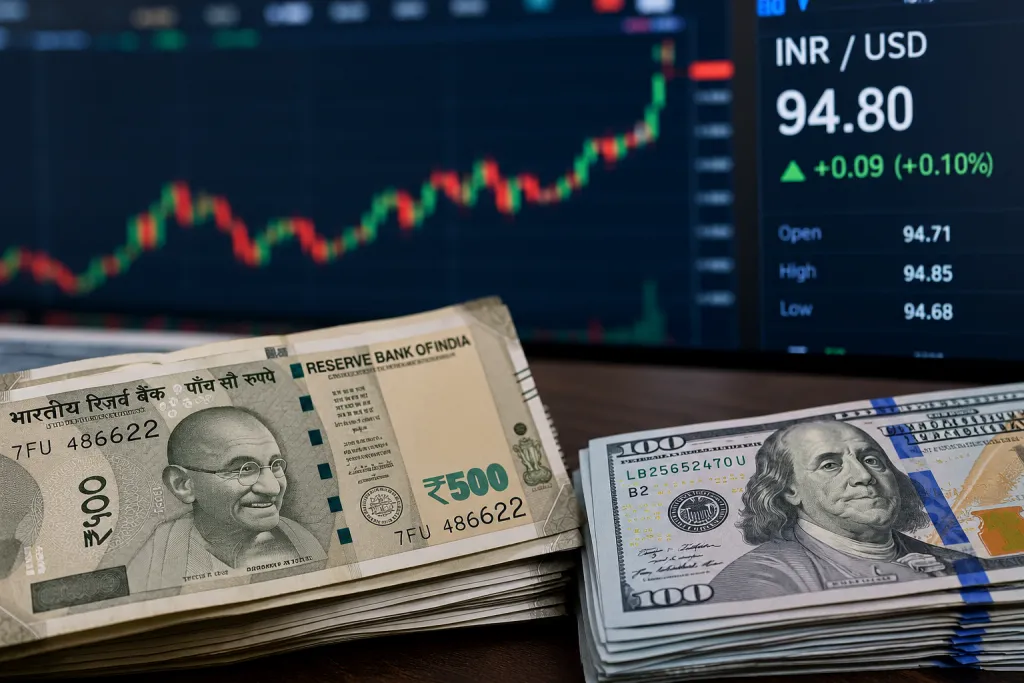
The Indian rupee strengthened to ₹94.80 against the US dollar on October 19, 2026, gaining 9 paise in early trade. The recovery comes after a period of significant pressure on the domestic currency, with Reserve Bank of India (RBI) measures helping stabilise the foreign exchange market. However, rising crude oil prices remain a major concern.
Why Is the Rupee Rising?
The rupee’s recent recovery is being supported by several factors:
RBI intervention: The central bank has introduced measures to manage dollar demand and reduce pressure on the rupee.
Lower dollar demand in the spot market: A special arrangement for state-owned oil companies to access dollars has helped reduce their direct demand in the open market.
Easing crude oil prices: A recent decline in international oil prices has provided some relief to the Indian currency.
The rupee recorded a strong weekly recovery before extending its gains on Monday. However, analysts caution that these gains may not last unless broader economic conditions improve. Source: Business Standard
What Does a Stronger Rupee Mean for Indians?
A rising rupee can offer some relief to consumers and businesses, particularly those dependent on imports.
1. Potential relief from imported inflation: A stronger rupee can reduce the cost of importing crude oil, electronics and other goods, provided international prices remain unchanged.
2. Lower overseas expenses: Students studying abroad and families paying expenses in foreign currencies may benefit when converting rupees into dollars.
3. Impact on exporters: Indian companies earning revenue in US dollars may receive fewer rupees when converting their earnings, potentially affecting profit margins.
However, the benefits are not immediate or automatic. Domestic prices also depend on taxes, transportation costs and global commodity prices.
The Biggest Challenge: Rising Crude Oil Prices
India imports a substantial portion of its crude oil requirements, making the currency particularly sensitive to global energy prices. Expensive oil increases India's dollar demand and import bill, putting pressure on the rupee.
According to recent market reports, Brent crude has remained elevated, creating uncertainty about whether the currency's recovery can continue. Foreign investment flows and changes in US interest-rate expectations could also influence its direction.
What Should Investors Watch Next?
Investors should monitor crude oil prices, RBI policy actions, foreign investor flows and the US dollar's movement. These factors will help determine whether the rupee's recovery is sustainable or merely a short-term rebound.
A stronger rupee may improve market sentiment, but it does not automatically mean Indian stocks will rise or that the economy's external pressures have disappeared.
Final Takeaway
The rupee's rise to ₹94.80 against the US dollar is an encouraging development after recent weakness. Yet, sustained recovery will depend on more than central bank intervention. Lower oil prices, stable capital flows and stronger economic fundamentals will be important for the currency's longer-term outlook.
For consumers, businesses and investors, the key is to look beyond a single day's movement and understand the economic forces driving the rupee.