Automated Trading: How Technology Is Changing the Way People Trade in Financial Markets
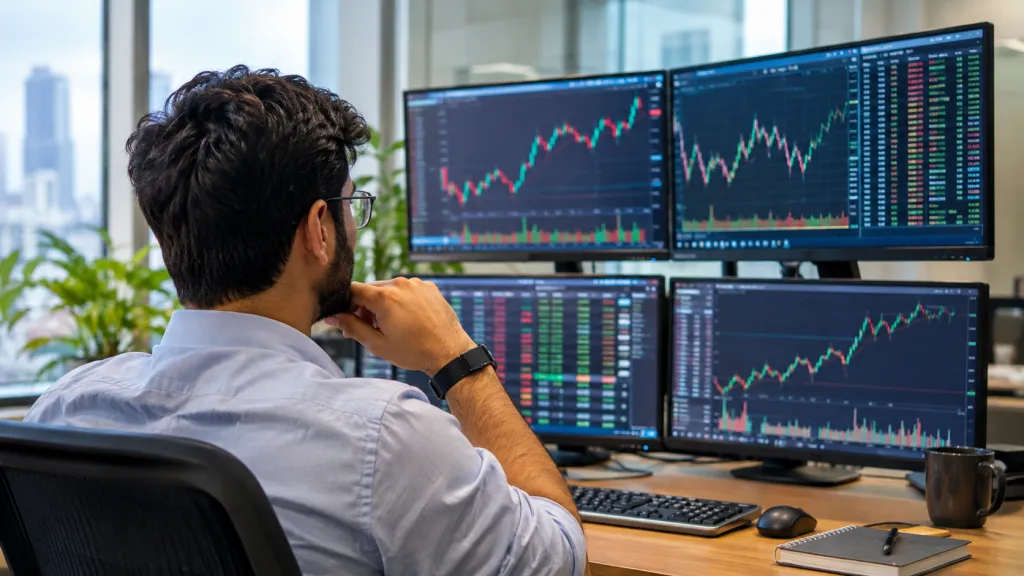
Financial markets are becoming increasingly technology-driven. From analysing price movements to identifying trading opportunities, technology is transforming how investors and traders make decisions. One development gaining attention is automated trading, an approach that uses predefined rules and algorithms to execute trading strategies with minimal manual intervention.
Traditionally, traders spent hours monitoring charts, studying market trends and deciding when to enter or exit positions. Automated trading aims to make this process more systematic by allowing technology to analyse market conditions and act according to a predefined strategy.
But does automated trading really make trading easier, and what should investors understand before exploring it?
What Is Automated Trading?
Automated trading, also known as algorithmic trading, involves using computer programs to identify trading opportunities and execute orders based on predefined conditions.
For example, a trader may create a strategy that generates a buy signal when a short-term moving average crosses above a long-term moving average. Instead of constantly monitoring the charts, an automated system can track these conditions and respond when the rules are met.
These systems can use technical indicators, price movements, market data and other predefined parameters to make trading decisions.
The objective is not simply to trade faster. It is to bring consistency, structure and discipline into the trading process.
Why Are More Traders Exploring Automated Trading?
The growing interest in automated trading comes from the convenience and systematic approach it offers.
1. Reduced Emotional Decision-Making
Fear and greed often influence trading decisions. Traders may exit positions too early or hold losing trades for too long. Automated strategies follow predefined rules, helping reduce impulsive decisions.
2. Continuous Market Monitoring
Financial markets can move quickly, and monitoring multiple charts manually can be challenging. Automated systems can monitor market conditions and identify signals according to their programmed logic.
3. Strategy-Based Trading
Instead of making decisions based on market rumours or sudden price movements, traders can develop strategies using technical indicators, historical data and specific entry and exit conditions.
4. Backtesting Before Live Trading
One of the biggest advantages of automated trading tools is the ability to test strategies against historical market data. Backtesting helps traders understand how a strategy might have performed under previous market conditions before considering real-money execution.
However, historical performance does not guarantee similar results in the future.
Can Automated Trading Eliminate Trading Risks?
Despite its advantages, automated trading is not a shortcut to guaranteed profits.
An algorithm can execute instructions efficiently, but it cannot eliminate market uncertainty. A strategy that performs well during one market condition may struggle during another.
Some important risks include:
Market volatility: Unexpected price movements can affect strategy performance.
Over-optimisation: A strategy may appear successful in historical testing but fail in real market conditions.
Technical failures: Internet disruptions, software errors and execution delays can affect trades.
Poor risk management: Incorrect position sizing or inadequate stop-loss rules can increase potential losses.
This is why traders should understand the logic behind their strategies, test them thoroughly and establish appropriate risk limits before considering live trading.
How Platforms Like QuantScript Are Bringing Automation Closer to Traders
Developing an automated trading strategy once required considerable technical knowledge, programming skills and access to specialised tools. However, newer platforms are working to simplify different stages of the strategy-development process.
One such platform is QuantScript, which focuses on helping users explore, develop, test and deploy automated trading strategies.
Through its platform, users can explore different strategy ideas, work with strategies in a browser-based playground, examine performance reports and access cloud-based deployment workflows.
The broader objective is to bring strategy development and automation into a more organised environment rather than requiring traders to manage multiple disconnected tools.
For traders interested in understanding algorithmic trading, QuantScript offers a way to explore how trading strategies can move from an initial idea towards testing and potential deployment.
You can explore the platform at https://www.quantscript.com/.
Is Automated Trading the Future of Financial Markets?
Technology is likely to play an increasingly important role in financial markets. As access to analytical tools and automated strategy development improves, more retail traders may explore systematic approaches alongside traditional trading methods.
However, successful trading will continue to depend on understanding market behaviour, managing risk and making informed decisions.
Automated trading should be viewed as a tool that supports a trading approach, not a replacement for financial knowledge or responsible decision-making.
The future of trading may not be about spending more hours watching charts, but about developing better strategies, testing them carefully and understanding the technology behind every trade.
Disclaimer: This article is for educational and informational purposes only and should not be considered financial or investment advice. Automated trading involves financial risk, and no strategy or platform can guarantee profits. Users should conduct independent research and understand the risks before trading with real money.