Global Food Crisis 2026: Jaishankar's Warning Raises Concerns Over Inflation, Fertiliser Shortages and India's Economy
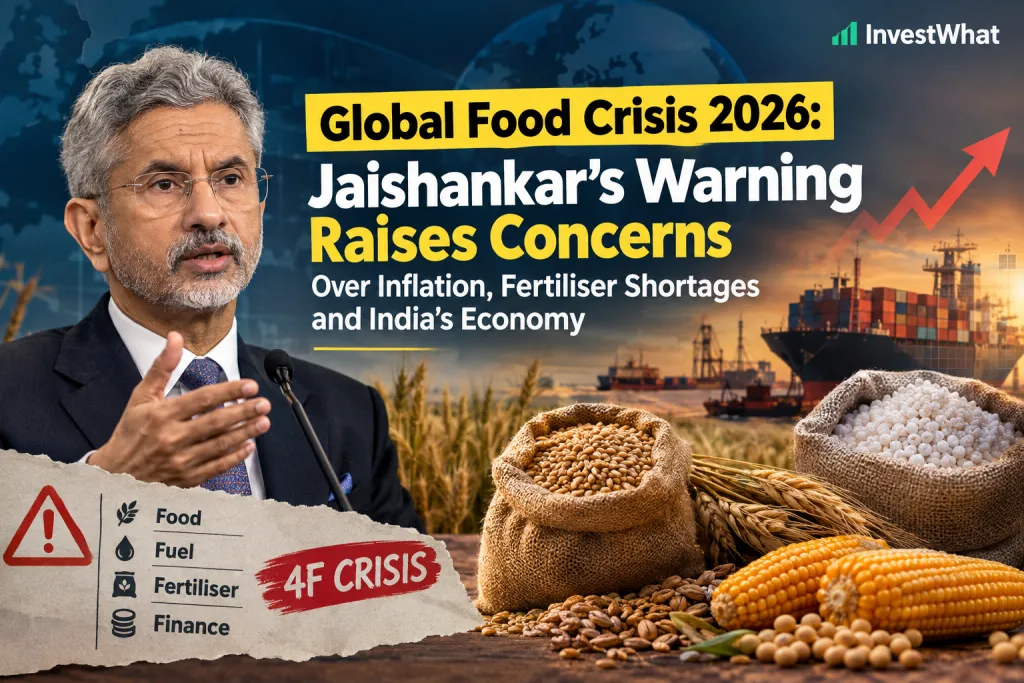
A potential global food crisis is emerging as a major economic concern, with India's External Affairs Minister S. Jaishankar warning of significant food shortages in the coming months. Speaking at an event organised by the Asia Society in New York on September 28, he highlighted the impact of geopolitical conflicts, fertiliser shortages, disrupted grain shipments and rising energy pressures.
For investors and businesses, the warning goes beyond food security. It raises concerns about inflation, agricultural production, global trade, interest rates and the financial outlook for developing economies, including India.
What Is Behind the Potential Food Crisis?
The ongoing conflicts in Ukraine and West Asia are putting pressure on global supply chains. Disruptions to energy supplies and grain transportation, combined with fertiliser shortages, could increase agricultural production costs.
Jaishankar also highlighted the potential impact of a strong El Niño weather pattern, which could further complicate agricultural output.
The minister warned that developing economies could face a combined crisis involving four critical areas: food, fuel, fertiliser and finance, commonly referred to as the "4F crisis".
How Could the Crisis Affect India's Economy?
India's economy could face several challenges if global food and energy supplies remain disrupted.
Food inflation: Higher prices of imported agricultural inputs and transportation could increase food production costs, potentially pushing up retail prices.
Fertiliser costs: Supply disruptions and higher energy prices could raise fertiliser costs, putting pressure on farmers and potentially increasing the government's subsidy burden.
Rupee and trade deficit: Higher crude oil and commodity import bills could widen India's trade deficit and add pressure on the rupee.
Interest rates: Persistent food and fuel inflation could complicate the Reserve Bank of India’s monetary policy decisions, particularly if inflation expectations rise.
These are potential economic consequences, not confirmed outcomes. Their scale will depend on the duration of geopolitical disruptions, domestic harvests, global commodity prices and India's policy response.
Which Sectors Could Be Affected?
Sector | Potential impact |
|---|---|
Agriculture | Higher input costs and possible supply disruptions |
FMCG | Increased raw material, packaging and transportation expenses |
Fertilisers | Greater demand for reliable supplies, alongside cost pressures |
Oil & Gas | Volatile global energy prices and import costs |
Banking | Possible pressure on borrowers and changes in interest-rate expectations |
Consumer goods | Reduced household purchasing power if food inflation rises |
What Does This Mean for Investors?
The possibility of a global food crisis introduces another source of uncertainty for financial markets. Higher commodity prices can affect corporate profit margins, consumer spending and inflation expectations.
Investors may monitor global food and fertiliser prices, crude oil movements, the rupee's exchange rate, monsoon conditions and the government's fiscal measures. Companies with significant exposure to agricultural inputs, transportation and consumer spending may experience different effects depending on their ability to manage rising costs.
However, a potential crisis does not automatically translate into a market downturn. Domestic production, government food reserves, supply diversification and policy interventions can help cushion economic shocks.
The Road Ahead: Will India Be Able to Withstand the Pressure?
India's ability to manage a potential food crisis will depend on agricultural output, food stock management, diversified imports and the stability of global supply chains. Government intervention, including targeted subsidies and measures to maintain essential food supplies, could help limit the impact on households.
Jaishankar's warning highlights how geopolitical conflicts can create economic consequences far beyond the countries directly involved. For India, the challenge will be to balance food affordability, energy security, fiscal stability and economic growth.
Conclusion
The possibility of a global food crisis is an important economic risk to watch in 2026. Rising fertiliser costs, energy market disruptions and uncertain weather conditions could create additional inflationary pressures for India and other developing economies.
For investors, the key takeaway is to monitor changing commodity prices, inflation data and policy developments rather than assume a particular market outcome. The coming months will reveal how effectively global supply chains and national economies respond to these interconnected challenges.