Rentomojo IPO Under Legal Scrutiny: Risk vs Opportunity for Investors
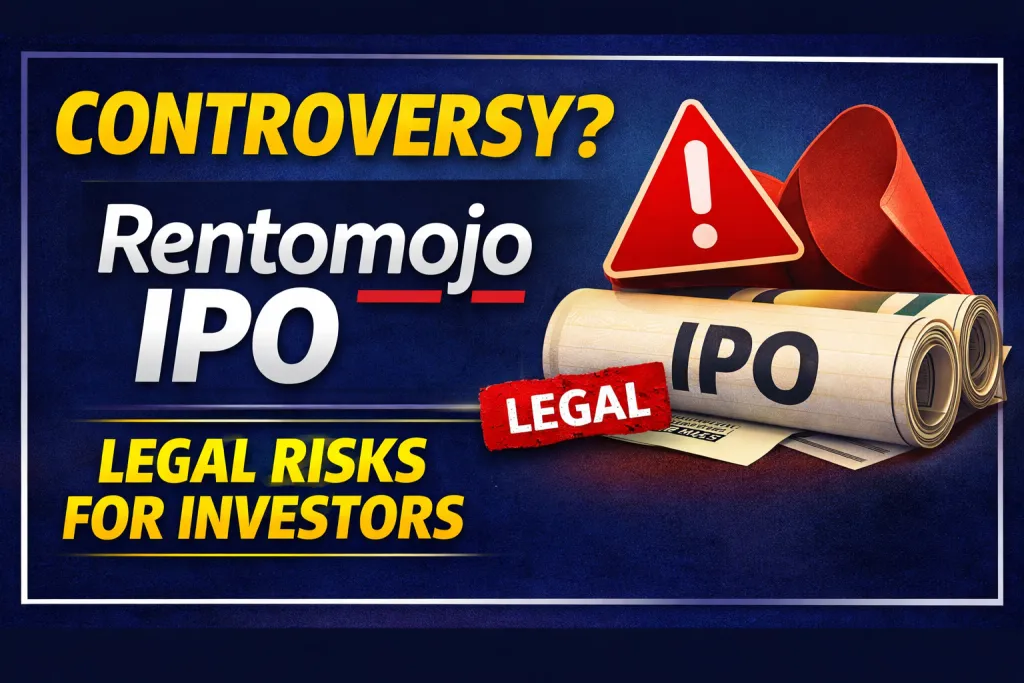
Every so often, a startup IPO arrives with a compelling growth story and a cloud hanging over it at the same time. Rentomojo's upcoming public offering is shaping up to be exactly that. On one hand, the company is profitable, growing fast, and leads its niche. On the other hand, a co-founder has knocked on the doors of a tribunal to stop the IPO from happening. So what does all of this mean for you as an investor? Let's break it down.
The Legal Cloud: What Exactly Happened?
Here is where things get complicated.
Rentomojo co-founder and former director Ajay Nain has filed a petition before the NCLT's Bengaluru bench on March 25, 2026, just days after the DRHP filing, claiming he was misled into selling his stake back in 2023.
Nain had sold 2,222 equity shares, representing approximately 9.41% of the company at the time, to the RM Employee Benefit Trust under a share purchase agreement dated August 22, 2023. He now alleges that incomplete or inaccurate information was shared with him at the time of the transaction.
The petition is wide-ranging in what it seeks: declaring the 2023 transaction void, restoring his shareholding, removing the company's promoter from the board, curbing the powers of directors, and critically, stopping the IPO process entirely, including filing or pursuing offer documents with SEBI.
Rentomojo has responded by filing caveats to ensure no orders are passed without its representation, and the matter has not yet been listed for hearing.
This is not a minor procedural dispute. A co-founder alleging he was misled into selling his stake just before a major liquidity event raises serious questions about internal governance, the circumstances of that 2023 transaction, and how the company managed its cap table.
What Does Rentomojo Do?
Rentomojo is an online rental and subscription platform for home furniture and appliances, operating a technology-driven, full-stack direct-to-consumer (D2C) model across India. Think of it as a Netflix-style subscription, but instead of shows, you get a sofa, a washing machine, or a refrigerator delivered to your home, used for as long as you need it, and returned when you're done.
The company runs an omni-channel model comprising its online interface and 67 experience stores across India as of September 30, 2025, and is the largest player in the organised online rental segment for furniture and appliances, with an estimated market share of 42–47% based on subscription revenue.
This model has found its footing particularly well in India's metro cities, where young professionals prefer flexibility over ownership — a trend that has only accelerated post-pandemic.
The IPO: What's on the Table?
Rentomojo has filed its Draft Red Herring Prospectus (DRHP) with SEBI for an IPO comprising a fresh issue of up to ₹150 crore and an offer for sale of up to 2.84 crore equity shares by existing shareholders. The face value of each equity share is ₹1.
Accel India will lead the OFS by offloading 78.46 lakh shares, followed by Chiratae Ventures with 44.9 lakh shares. ValueQuest S.C.A.L.E Fund and Edelweiss Discovery Fund will offload 27.13 lakh and 32 lakh shares, respectively. Founder Geetansh Bamania will also participate in the OFS. The company is also considering a pre-IPO placement of ₹30 crore.
The company proposes to utilise the funds from the fresh issue for the repayment or prepayment of certain outstanding borrowings, payment of lease rentals or licence fees for its warehouses and experience stores, and general corporate purposes.
In other words, a significant portion of the IPO proceeds will go towards cleaning up existing debt rather than funding fresh growth — a point investors should keep in mind.
The Financials: A Turnaround Story
The numbers are hard to ignore. Rentomojo's net profit rose 92% to ₹43.1 crore in FY25 on revenue of ₹266 crore. The company further reported ₹61.3 crore in profit in just the first half of FY26, suggesting that the full-year FY26 profitability will likely surpass FY25 comfortably.
The company's revenue grew at approximately 49% CAGR between FY23 and FY25, which is the highest among peers in the D2C segment. Rentomojo's EBITDA margins are 40%+, reflecting strong unit economics. For a startup that was once burning cash to grow, this is a meaningful shift.
Rentomojo offers a diversified portfolio of over 7.28 lakh live products and maintains an occupancy rate of over 80%, which shows strong demand and efficient asset management.
For investors who have seen too many startup IPOs arrive with losses dressed up as "investments in growth," Rentomojo's consistent profitability stands out.
Risk vs Opportunity: How Should Investors Think About This?
Let's be balanced here. There are two valid ways to read this situation behind the alleged misleading share sale.
The Opportunity Case
The business fundamentals are genuinely strong. Rentomojo leads a niche that is structurally well-positioned for India's urbanising, renting-friendly demographic. The 40%+ EBITDA margins, the jump to profitability, and the dominant market share are not cosmetic metrics; they reflect a real business model that works.
Rentomojo is among the few D2C platforms in India demonstrating consistent profitability with high return ratios, and its combination of scale, profitability, and structural growth is very rare in the D2C economy.
If the legal case is resolved in the company's favour, or doesn't result in an interim stay on the IPO, investors who got in early could benefit from being part of a sector leader at a reasonable entry point.
The Risk Case
Legal disputes involving co-founders are a red flag that goes beyond the courtroom. When someone who helped build a company approaches a tribunal claiming they were misled during a share transaction, it raises governance concerns that no balance sheet can fully address. Investors in public markets are not just buying a business; they are trusting the people running it.
There is also the structural concern: a large chunk of the fresh issue proceeds is earmarked for debt repayment rather than growth. That means retail investors' money will partly go towards paying off lenders, not expanding the platform. This is not necessarily a dealbreaker, but it does limit the immediate growth optionality that many IPO investors look for.
Additionally, the OFS component is heavy, meaning several existing investors and even the founder are using this IPO as an exit. When insiders sell aggressively at listing, it often signals that they believe the current valuation captures most of the near-term upside.
What Should You Do as an Investor?
Here are a few practical pointers before you decide:
Watch the NCLT developments closely. The petition has been filed but not yet listed for a hearing. If the tribunal grants an interim stay, the IPO will be delayed. If it dismisses the petition or rules in Rentomojo's favour, the legal risk reduces considerably. Either way, the outcome will tell you a lot about the company's governance health.
Read the DRHP carefully. The risk factors section of a DRHP is where companies are legally required to disclose threats to the business. The Nain petition will almost certainly feature prominently. Pay attention to how the company describes the dispute and what it says about potential outcomes.
Assess valuation at the time of the final price band. Strong fundamentals and a clean market leader position can justify a premium — but only up to a point. With the OFS being large and proceeds partly going to debt, ensure the price you are paying reflects realistic growth expectations, not just hype.
Don't dismiss the governance concern. A co-founder dispute at IPO time is unusual. It doesn't mean the company is unworthy of investment, but it does warrant extra scrutiny about how decisions are made at the top.
The Bottom Line
Rentomojo's IPO is a genuinely interesting opportunity wrapped in a genuinely uncomfortable situation. The business is profitable, category-leading, and growing fast. But the legal challenge from a co-founder, filed just days after the DRHP, introduces an element of uncertainty that prudent investors cannot ignore.
The IPO market often rewards stories that look clean on the surface. Rentomojo's story is compelling, but it is not clean right now. Whether that changes before the IPO opens, and how you weigh risk against opportunity, will ultimately define whether this is the right bet for your portfolio.
As always, do your homework before the subscription window opens.