Indian IT Q3 Mixed: TCS Hit by Labour Codes, HCL Beats, Trade Talks Rally
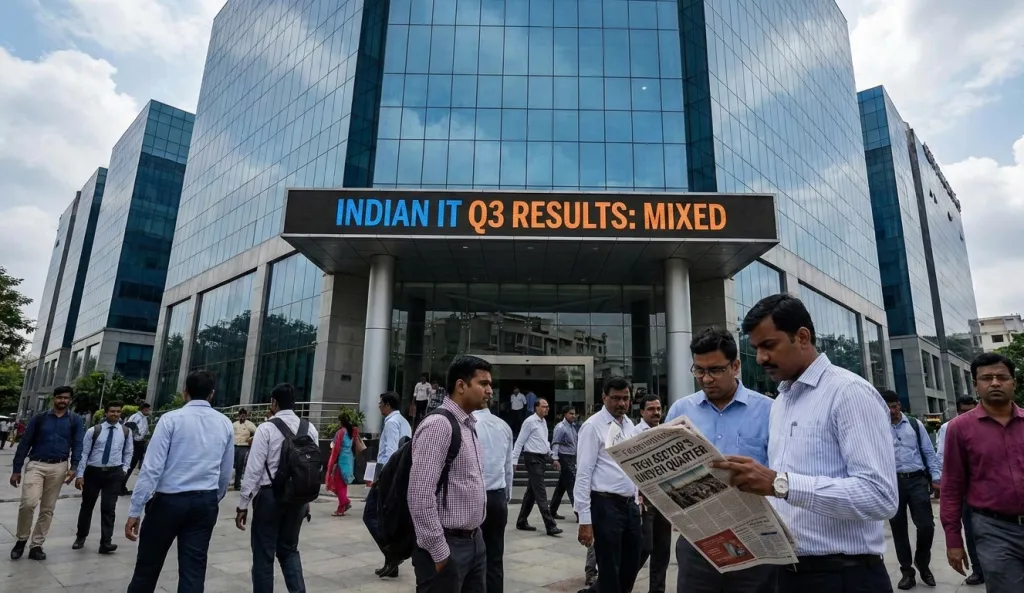
Indian IT stocks are back in focus as TCS and HCLTech delivered contrasting Q3 FY26 numbers just as fresh optimism emerged on India – US trade talks and India’s likely entry into the US‑led Pax Silica tech initiative. For equity investors, the story is one of one‑off regulatory hits to profits, resilient demand in digital and AI, and an emerging macro tailwind from trade diplomacy.
TCS: Profits Hit, AI Strength Intact
Tata Consultancy Services reported a sharp year‑on‑year decline in Q3 FY26 net profit to about ₹10,657 crore, driven largely by exceptional charges linked to India’s newly implemented labour codes and a US legal provision. The labour code change alone created a statutory impact of ₹2,128 crore, including roughly ₹1,816 crore for gratuity and ₹312 crore for long‑term compensated absences due to the new wage definition.
Despite the bottom‑line pressure, TCS maintained healthy operating performance, with revenue growth around mid‑single digits and continued traction in cloud, digital and AI services. Management highlighted AI transformation as a key growth vector, underpinned by a large reskilled workforce and rising client demand for automation and analytics‑led projects.
HCLTech: Beat On Revenue, Raises Guidance
HCLTech delivered a stronger Q3 FY26 print on the top line, posting revenue of about ₹33,800 crore with roughly 6% sequential growth, outpacing street expectations. The company absorbed an estimated ₹956 crore one‑time increase in employee benefit provisions from the new labour codes, which dragged net profit to a little above ₹4,000 crore and caused a modest sequential decline.
Crucially for investors, HCLTech narrowed and effectively raised its full‑year constant‑currency revenue growth guidance to 4 – 4.5%, while keeping EBIT margin guidance at 17–18% after adjusting for the one‑off labour impact. Deal wins remained robust, with a US$3 billion order book and advanced AI revenue growing nearly 20% quarter‑on‑quarter to around US$146 million.
New Labour Codes: One‑Off Pain, Limited Ongoing Drag
India’s four new labour codes, notified in November 2025, standardise wage definitions and force companies to recalculate benefits like gratuity and leave encashment, pushing basic pay to at least 50% of cost‑to‑company. For IT firms with large workforces, this means a sizeable one‑time provisioning hit as they align actuarial assumptions with the new norms.
Brokerage commentary suggests that, beyond these provisions, the recurring P&L impact on margins for both TCS and HCLTech is likely limited to about 10–15 basis points from the next quarter, assuming no further rule tweaks. This frames the current quarter’s labour‑code hit more as a technical reset than a structural erosion of profitability, which is important for long‑term valuations.
India–US Trade Talks And Pax Silica Upside
On the macro side, sentiment improved after new US Ambassador Sergio Gor confirmed that India and the US would take up pending trade issues in a call scheduled for January 13, signalling progress toward a long‑awaited trade deal. Gor also said India will be invited to join Pax Silica, a US‑led initiative to secure silicon, semiconductor and AI‑linked supply chains, after being left out in its first phase.
Pax Silica membership could benefit Indian IT and tech firms indirectly by deepening cooperation in semiconductors, AI and critical digital infrastructure, potentially driving more high‑value transformation and engineering deals to Indian vendors over time. For markets that had recently seen sharp wealth erosion, the combination of resumed trade dialogue and strategic tech‑supply‑chain integration has acted as a relief signal.
What It Means For Investors
Large‑cap IT remains fundamentally resilient: Revenue and deal momentum at both TCS and HCLTech stayed solid despite the profit drag from regulatory changes.
Labour‑code damage is mostly one‑time: Provisions are front‑loaded, while recurring impact on margins appears manageable and already baked into guidance.
Macro supports medium‑term rerating: Constructive India–US trade signals and Pax Silica participation strengthen the strategic backdrop for India’s export‑driven IT sector.
Stock‑picking lens: Investors may favour names with stronger guidance, higher AI and cloud exposure, and clearer communication around post‑labour‑code margin trajectories.
You can position this article on your blog as an “earnings + policy” explainer that helps retail investors connect Q3 IT numbers with regulatory changes and the evolving India–US tech partnership.