Goldman Sachs Bets Big on Solana and XRP ETFs: A New Era for Crypto Investments
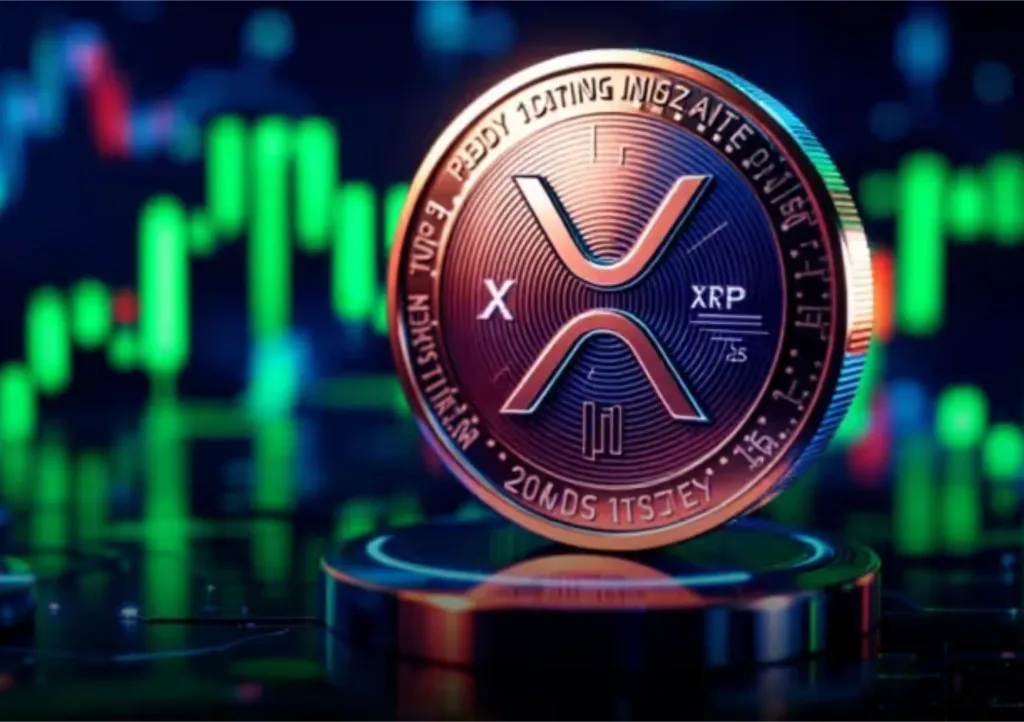
Goldman Sachs has made headlines by disclosing $108 million in Solana ETFs and $152 million in XRP ETFs in its latest SEC filing, signaling Wall Street's growing embrace of altcoins beyond Bitcoin and Ethereum. This move, part of a $2.36 billion crypto portfolio, highlights diversification into high-speed blockchains like Solana and cross-border payment solutions like XRP. As institutional money flows in, what does this mean for the future of digital assets in 2026?
Goldman Sachs, one of the world's leading investment banks, has quietly revolutionized its crypto strategy with a bold diversification play. In its Q4 2025 Form 13F filing submitted to the U.S. Securities and Exchange Commission, the firm unveiled holdings of approximately $108 million in Solana exchange-traded funds (ETFs) and $152.2 million in XRP ETFs. This marks the first time Goldman has reported positions in these altcoin ETFs, expanding beyond its traditional heavy weighting in Bitcoin and Ethereum products. The total crypto exposure now stands at $2.36 billion, or about 0.33% of its vast portfolio, underscoring a maturing institutional appetite for regulated digital asset vehicles.
This development comes at a pivotal moment in the cryptocurrency market. Bitcoin and Ethereum ETFs, approved in early 2024, paved the way for broader adoption, but skepticism lingered around faster, more application-focused networks like Solana. Goldman's entry validates Solana's high-throughput capabilities, capable of thousands of transactions per second with low fees, and XRP's niche in efficient cross-border payments. While the bank trimmed some Bitcoin and Ethereum positions amid price volatility (Bitcoin hovered around $94,000 at year-end, now down nearly 30%), it initiated fresh bets on these newcomers, allocating roughly 4 to 5% of its crypto holdings to Solana alone.
Breaking Down the Holdings
Goldman's Solana ETF investments are spread across multiple providers, showcasing a diversified approach within the still-nascent category. Key allocations include $45 million to the Bitwise Solana Staking ETF, which offers yield through network staking, and $35.7 million to the Grayscale Solana Trust ETF. Smaller stakes went to products from Fidelity, VanEck, 21Shares, and Franklin Templeton. This granularity reflects strategic caution: rather than a single-provider bet, Goldman spreads risk while capturing exposure to Solana's ecosystem, known for powering decentralized finance (DeFi), NFTs, and meme coin frenzies.
XRP's slice, at $152 to 153 million, taps into Ripple's ledger technology, long favored for remittances due to its speed (settlements in 3 to 5 seconds) and cost-efficiency (fractions of a cent per transaction). The bank's pivot aligns with Ripple's regulatory wins, including partial victories against the SEC, boosting ETF viability. Combined, these altcoin positions total around $260 million, a modest but symbolic shift from Bitcoin ($1.1 billion equivalent to 13,741 BTC) and Ethereum ($1 billion).
Market reactions were swift. Binance founder Changpeng Zhao highlighted the $2.36 billion total on social media, contrasting banks' expansion with some retail pullbacks. Solana's price, trading around levels that drew trader support, surged post-disclosure, while XRP held steady above key supports. Analysts like those at Bloomberg point to U.S. political shifts, President Trump's pro-crypto reelection, as greasing the wheels for more ETF approvals. Brazil's recent spot Solana ETF greenlight further fuels global momentum.
Why Solana? The High-Performance Play
Solana's appeal to institutions like Goldman stems from its technical edge. Unlike Ethereum's occasional congestion, Solana processes up to 65,000 transactions per second (TPS) via Proof-of-History consensus, blending time-stamping with Proof-of-Stake for scalability. Energy efficiency is another draw: a single Solana transaction uses as much power as a few Google searches, contrasting Bitcoin's proof-of-work heft. This makes it ideal for real-world apps, from DeFi protocols like Jupiter to payment rails eyed by stablecoin issuers.
Goldman's stake in staking-focused ETFs like Bitwise's adds yield potential: Solana validators earn 5 to 7% APY, far outpacing traditional bonds in a low-rate world. The network's $50+ billion market cap (as of early 2026) cements its #5 ranking, bolstered by integrations with PayPal and Visa for stablecoin settlements. Yet risks persist: outages in 2022 to 2023 spooked some, though upgrades like Firedancer have stabilized it. Goldman's bet implies confidence in Solana's maturation, potentially unlocking stablecoin volumes projected to hit $5 trillion by 2028.
XRP's Resurgence: Payments Powerhouse
XRP, Ripple's native token, shines in enterprise use cases. Designed for liquidity provision in forex and remittances, it bridges fiat currencies instantly, slashing costs for banks handling $10 trillion annually in cross-border flows. Goldman's position arrives post-Ripple's SEC clarity, with courts ruling secondary XRP sales non-securities. ETF wrappers make it accessible without direct custody hassles, appealing to compliance-focused giants.
At 4% of Goldman's crypto pie, XRP complements Solana's speed with regulatory moats. Ripple's On-Demand Liquidity (ODL) has processed billions, partnering with MoneyGram and SBI. As BRICS nations eye de-dollarization, XRP's neutral ledger positions it as a SWIFT alternative. Price-wise, holding above $0.57 amid volatility shows resilience, with ETF inflows potentially catalyzing new highs.
Broader Market Implications
This filing isn't isolated. Morgan Stanley launched a Solana ETF with 6.5% staking rewards, while CME Group debates crypto's lasting appeal. Goldman itself named top 2026 picks including Solana, per reports. Total ETF assets under management (AUM) have ballooned to $100+ billion, with altcoins drawing $70 million YTD for Solana funds alone. Institutional signals like these accelerate mainstreaming: BlackRock and Fidelity followed Bitcoin ETF leads, now eyeing Solana filings.
Bitcoin's dominance dips as alts rise. SOL and XRP funds saw $4.5 million and $0.7 million weekly inflows pre-filing. Trump's administration, inaugurated January 2025, promises lighter SEC touch, with ETF approvals hinging on politics per Bloomberg's Nate Geraci. Brazil and Europe's nods foreshadow U.S. spot Solana/XRP products, potentially injecting $50 billion more.
Risks and Skepticism
Not all rosy: Goldman's BTC exposure dropped 30% value post-filing due to price dips. Altcoins face volatility. Solana's meme-driven pumps contrast enterprise stability. Regulatory U-turns loom if politics shift, and centralization critiques dog Solana (top validators control sway). XRP's Ripple ties invite scrutiny. Still, ETF structure mitigates direct ownership risks, favoring custodians like Coinbase.
Goldman's evolution, from pre-2020 Bitcoin skepticism to $2.36 billion today, mirrors Wall Street's arc. No direct tokens; all via regulated ETFs. This prudence suits fiduciary duties, blending crypto's upside with compliance.
Future Outlook: 2026 and Beyond
2026 shapes as crypto's institutional year. Goldman's move could spur peers, JPMorgan, Citi, to altcoin ETFs. Solana's ecosystem, with 1,000+ projects, eyes TradFi bridges. XRP targets a $27 trillion payments market. Projections: Solana AUM hits $10 billion, XRP $5 billion by year-end if approvals flow.
Price predictions vary: Solana to $300+ on ETF hype, XRP $2+ on adoption. But fundamentals rule. Solana's Firedancer upgrade, XRP's ISO 20022 compliance. Trump's policies may be fast-track, per experts.