Why Global Markets Are Talking About Stagflation Again: What $100 Oil and Higher Rates Mean for India

Time to read: 3 minutes
A word that markets hoped had been left behind in the 1970s is appearing again: stagflation.
Oil remains above $100 a barrel, borrowing costs are rising across major economies and central banks are becoming more cautious about inflation. The combination has revived concerns that economies could face an uncomfortable mix of persistent inflation and weaker economic growth.
For India, this does not mean the economy is currently in stagflation. Growth remains relatively strong.
But as one of the world's largest crude-oil importers, India is particularly sensitive to the combination of expensive energy, a weaker rupee and higher global interest rates.
What Is Stagflation?
Stagflation describes a situation where inflation remains high while economic growth slows or stagnates.
Normally, central banks can cut interest rates when growth weakens. But when inflation is already elevated, lowering rates can risk pushing prices even higher.
Raising rates presents the opposite problem: it can help control inflation but may further slow borrowing, investment and consumer spending.
That difficult trade-off is why investors pay close attention when inflation and growth begin moving in opposite directions.
Why Are Stagflation Concerns Returning?
The first factor is energy.
Middle East supply disruptions have pushed crude oil sharply higher in 2026. Reuters reported this week that oil prices had risen more than 50% from pre-war levels, while diesel and jet-fuel prices have also increased substantially.
Oil has eased over the past few sessions as concerns around Saudi supply disruptions moderated. On September 18, Brent crude fell to around $102.53 per barrel, while US WTI was close to $100. Oil therefore remains expensive despite the recent decline.
Higher energy prices can filter through economies through transportation, manufacturing, electricity and logistics costs.
The second factor is interest rates.
The US Federal Reserve raised its policy rate by 25 basis points on September 16 to 3.75%–4.00%, its first increase in more than three years. Fed policymakers also raised their 2026 inflation forecast to 3.7% and indicated that further tightening may be appropriate.
Japan has also raised rates, while policymakers in Europe and the UK remain focused on inflation risks created partly by higher energy costs.
At the same time, government-bond yields have climbed. The US 10-year Treasury yield crossed 5% earlier this week, raising borrowing costs across global financial markets.
Together, expensive energy and higher borrowing costs create the conditions behind today's stagflation discussion.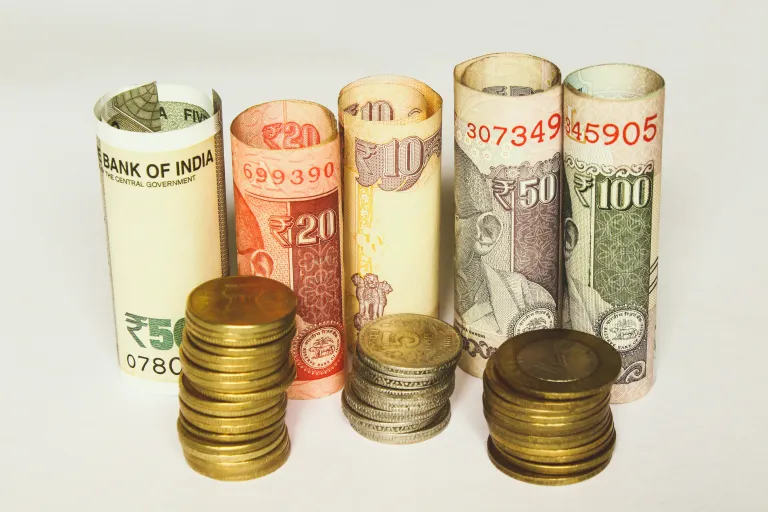
Is India Facing Stagflation?
Not currently.
India's economic growth remains considerably stronger than that of many major economies.
The Indian economy expanded 7.8% year-on-year in the April-June 2026 quarter, and Moody's on September 18 raised its FY27 growth forecast for India to 7% from 6%.
The labour market has also remained relatively resilient. India's unemployment rate fell to 5% in August, a six-month low.
So describing India itself as being in stagflation would be inaccurate.
The concern is instead that global stagflationary pressures could make India's economic environment more difficult.
Why $100 Oil Matters More for India
India imports most of the crude oil it consumes.
Government data showed crude-oil import dependence at approximately 88.6% during April-January FY26. Nearly half of those imports came from the Middle East during that period.
That makes India particularly sensitive to oil-price shocks.
When crude becomes more expensive, Indian refiners require more dollars to pay overseas suppliers. This can increase India's import bill and add pressure on the rupee.
The rupee was trading at around ₹95.78 per US dollar on September 18, after approaching the ₹96 level earlier in the week. The recent decline in crude prices has provided some temporary support to the currency.
A weaker rupee can then make imported oil and other dollar-priced goods even more expensive in domestic terms.
Inflation Is Already Moving Higher
India's retail inflation rose to 4.82% in August, from 4.45% in July.
Core inflation, which excludes some of the more volatile components, increased to approximately 4.2%.
That does not signal an inflation crisis. India's headline inflation remains within the RBI's 2%-6% tolerance range.
However, sustained crude prices above $100 could add further pressure.
An earlier Indian government economic review cited RBI estimates showing that, under certain assumptions, a 10% increase in crude prices could add around 30 basis points to inflation if the increase is fully passed through domestically.
What Does This Mean for Indian Interest Rates?
The RBI faces a balancing act similar to other central banks.
India's policy repo rate currently stands at 5.25%.
Higher oil prices and a weaker rupee can contribute to inflation, while higher interest rates can increase borrowing costs for businesses and households.
Markets have recently increased expectations for future RBI tightening. However, any policy decision will depend on domestic inflation, economic growth, liquidity and currency conditions rather than simply following the Federal Reserve.
Therefore, higher US rates do not automatically translate into higher Indian home-loan or personal-loan rates.
How Are Stock Markets Reacting?
So far, markets are showing concern rather than panic.
On September 18, the Nifty 50 was up about 0.14% at 23,302.40, while the Sensex gained 0.13%, helped partly by the decline in crude oil prices.
Wall Street also rebounded on September 17 as oil and Treasury yields eased. The S&P 500 gained 1.14% and the Nasdaq rose 1.69%.
That illustrates an important point: stagflation is currently a risk being priced by markets, not an established global economic outcome.
Oil prices, bond yields and economic growth will determine whether those concerns strengthen or fade.
Which Markets Are Most Sensitive?
Several markets provide clues about whether stagflation concerns are increasing.
Brent crude: Sustained prices above $100 can increase global inflation pressure, with a particularly strong impact on energy-importing countries such as India.
Government bonds: Rising US, European and Japanese yields indicate that investors expect inflation and interest rates to remain higher.
USD/INR: The rupee reflects both dollar strength and India's exposure to expensive imported energy.
Nifty and global equity indices: Higher rates can place pressure on valuations, while slower consumer spending can affect sectors dependent on discretionary demand.
Gold: Gold can benefit from economic or geopolitical uncertainty, although higher bond yields and a stronger dollar can work in the opposite direction.
For CFD markets, these relationships mean movements in oil, gold, global indices, currencies and bond yields are increasingly interconnected rather than being driven by separate stories.
The Bigger Picture
The return of the word "stagflation" does not mean the global economy — or India — has entered another 1970s-style episode.
For now, Indian growth remains strong, employment indicators have remained relatively stable and crude prices have eased from their recent highs.
But the combination of oil above $100, inflation moving higher and major central banks tightening monetary policy has created a more difficult global environment.
For India, the key variables are relatively clear: crude oil prices, the rupee, domestic inflation, global bond yields and RBI policy.
If energy prices continue to ease, some of the current pressure could reduce.
If oil remains elevated while global interest rates continue rising, the challenge becomes more complicated: controlling inflation without unnecessarily weakening economic growth.
That is why stagflation has returned to the market conversation.
This article is intended solely for educational and informational purposes and does not constitute investment, trading or financial advice. Market conditions can change rapidly. References to equities, commodities, currencies or indices are for explaining market developments and should not be interpreted as recommendations to buy, sell or hold any financial instrument.