Fed Rate Hike Expected Today: What Higher US Yields Could Mean for the Rupee, Indian Equities and CFD Markets

Fed Rate Hike Expected Today: What Higher US Yields Could Mean for the Rupee, Indian Equities and CFD Markets
Time to read: 3 minutes
Markets are heading into one of the most closely watched Federal Reserve decisions of 2026.
The Federal Open Market Committee concludes its two-day meeting on September 16, with its policy decision scheduled for 2:00 p.m. ET, or 11:30 p.m. IST. Fed Chair Kevin Warsh's press conference follows 30 minutes later.
Markets are heavily pricing in a 25-basis-point rate increase, which would lift the federal funds target range from the current 3.50%-3.75% to 3.75%-4.00%. Reuters reported that markets were assigning more than a 90% probability to such a move ahead of the announcement.
For India, however, the rate decision itself is only part of the story. The bigger question is what the Fed signals about rates beyond September.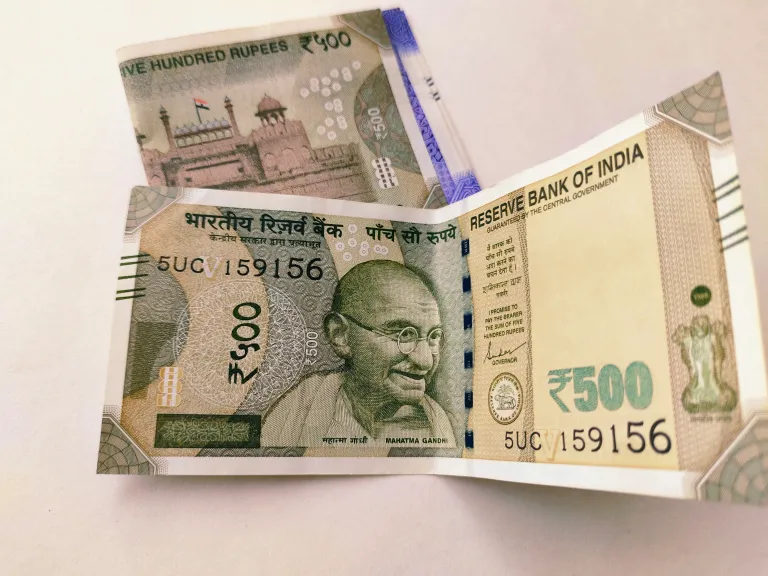
Why the 5% US Treasury Yield Matters
Bond markets have already moved sharply.
The benchmark 10-year US Treasury yield crossed 5% on September 15 and touched about 5.041%, its highest level since July 2007. It eased back toward 4.99% in Asian trading on Wednesday.
Higher US yields can make Treasury securities relatively more attractive compared with riskier emerging-market assets. For India, the effect can appear through several channels: foreign portfolio flows, the dollar, domestic bond yields and equity valuations.
But the Fed is not acting in isolation. Rising oil prices, persistent US inflation and concerns about government borrowing have also contributed to the jump in Treasury yields.
India Is Already Feeling the Pressure
Foreign investors have been reducing exposure to Indian equities through much of 2026.
Foreign portfolio investors had withdrawn approximately ₹2.37 lakh crore from Indian equities in 2026 through September 11, compared with about ₹1.66 lakh crore during the whole of 2025. September selling has been linked to a combination of higher US yields, a stronger dollar, elevated crude prices and broader global uncertainty.
That does not mean a Fed hike automatically causes further outflows. Capital flows also depend on Indian growth, valuations, domestic interest rates, corporate earnings and global risk appetite.
Still, higher US yields can reduce some of the relative yield advantage offered by emerging markets.
Rupee: Dollar Strength Meets Expensive Oil
The rupee is trading close to ₹96 per US dollar, around ₹95.9 in Wednesday's session, with the Reserve Bank of India reportedly intervening to limit excessive volatility.
The currency began January around ₹90 per dollar, making the depreciation significant.
Two external pressures are now working together.
First, expectations of higher US interest rates can support the dollar. Second, India remains a major crude-oil importer, and Brent crude was trading around $108 per barrel on September 16 amid continuing Middle East supply disruptions.
A weaker rupee combined with expensive crude can raise India's import bill and contribute to domestic inflation pressures.
For markets following the rupee, therefore, USD/INR, rather than INR/USD, is the more intuitive pair to monitor: rupee depreciation normally appears as a rise in USD/INR.
Indian Equities: The Impact Will Not Be Uniform
Higher global yields can pressure equity valuations by increasing the return investors demand from risk assets. But different Indian sectors can respond differently.
Banks, autos and other rate- or consumption-sensitive sectors may face pressure if borrowing costs and inflation expectations rise. Companies dependent on imported fuel or raw materials can also be affected by a weaker rupee and higher commodity prices.
Export-oriented businesses can behave differently. For example, Indian IT companies earn a significant portion of their revenues overseas, meaning rupee depreciation can provide a currency translation benefit even while higher global rates create other challenges.
The Nifty 50 and Sensex have already experienced sharp volatility in recent sessions as investors respond to oil prices, global bond yields and the Fed outlook.
Gold and Crude May Tell Different Stories
Gold is particularly sensitive to movements in the dollar and US real yields. Higher yields can increase the opportunity cost of holding non-yielding gold, although safe-haven demand can sometimes offset that effect.
Crude oil is different.
While the dollar and global interest-rate outlook matter, current oil prices are being heavily influenced by Middle East supply disruptions. That means crude should not simply be expected to move inversely to the dollar after the Fed decision.
RBI's $785.7 Billion Buffer
India enters the Fed decision with a sizeable external buffer.
RBI data showed India's foreign-exchange reserves reaching a record $785.7 billion in the week ended September 4, following an increase of roughly $45 billion during the week.
Those reserves give the RBI greater capacity to manage disorderly currency movements. They do not guarantee a particular USD/INR level, but they provide policymakers with greater room to intervene when volatility becomes excessive.
What Markets Will Watch After 11:30 PM IST
Because a quarter-point hike is already heavily priced into markets, attention will quickly move beyond the headline decision.
Investors will be watching the Fed's updated economic projections, the new interest-rate “dot plot,” the voting split within the FOMC and Kevin Warsh's comments during the press conference.
A signal that additional hikes are likely could keep pressure on global bond markets and emerging-market assets. A more cautious outlook could produce a very different reaction.
For anyone following leveraged markets, the key risk around scheduled events such as Fed meetings is not only direction. Spreads can widen, prices can gap and leverage can magnify both gains and losses.
The September Fed meeting therefore matters for Indian markets not simply because US rates may rise by 25 basis points, but because it could change expectations for the entire path of global interest rates over the months ahead.
This article is for educational and informational purposes only and does not constitute investment, trading or financial advice. Leveraged products involve substantial risk and may not be suitable for all investors. Availability and legality of financial products vary by jurisdiction. Readers in India should ensure that any foreign-exchange or derivative activity is conducted in accordance with applicable RBI, FEMA and SEBI requirements.