Global Tech Stocks Face Pressure as US Visa Crackdown and China Trade Tensions Weigh on Sentiment
Global technology stocks came under pressure as tighter US immigration restrictions, renewed trade tensions with China and concerns over elevated technology valuations unsettled investors. The developments are adding uncertainty to an already volatile sector, with semiconductor and artificial intelligence (AI) stocks particularly exposed to changes in investor risk appetite.

US Immigration Restrictions Raise Concerns for IT Firms
On October 8, the US administration suspended several major technology and IT services companies from participating in the Permanent Labor Certification Program (PERM), a key pathway through which employers sponsor eligible foreign workers for US permanent residency.
The affected companies include Microsoft, Adobe, Cognizant, Infosys, Tata Consultancy Services, Wipro, HCL Technologies and Capgemini. US officials cited alleged misuse of the programme and concerns about employment practices as reasons for the action.
The suspension does not amount to a blanket suspension of H-1B visas. However, it could complicate the route to permanent residency for eligible foreign employees and create uncertainty for companies that rely on international talent.
For India's IT services sector, the development introduces another variable into workforce planning, recruitment and client delivery. Investors will be watching for further regulatory announcements and company responses to assess the potential implications for operating costs and business growth.
Chinese Technology Stocks Face Valuation Pressure
Chinese equities also faced selling pressure as investors returned from the National Day holiday to renewed geopolitical uncertainty and concerns about stretched technology valuations.
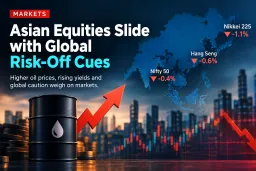
On Thursday, China's CSI 300 index fell 1.1%, while the technology-focused STAR 50 index dropped nearly 5%. Hong Kong's Hang Seng index also declined, reflecting weaker sentiment toward Chinese equities.
Technology and semiconductor companies have attracted significant investor interest amid expectations of growth in AI and domestic chip manufacturing. However, elevated valuations leave less room for disappointment if earnings fail to meet expectations.
Ongoing US-China trade friction adds another layer of uncertainty. Restrictions affecting technology exports, semiconductor supply chains and access to overseas markets could influence future growth expectations for companies operating across both economies.
What Investors Should Watch
The combination of immigration policy uncertainty, trade restrictions and demanding technology valuations is creating a more selective environment for global equity investors. Higher borrowing costs and the substantial capital expenditure required to expand AI infrastructure are also prompting closer scrutiny of company earnings and funding requirements.
Trader Takeaway: Global technology stocks face heightened volatility as investors reassess growth expectations and regulatory risks. High-beta AI and semiconductor stocks may remain vulnerable to short-term pullbacks, while some investors could rotate toward defensive sectors or cash. The direction of the next move will depend on corporate earnings, further US policy announcements and developments in US-China trade relations.
This article is for educational and informational purposes only and does not constitute investment, trading or financial advice. Leveraged products involve substantial risk and may not be suitable for all investors. Availability and legality of financial products vary by jurisdiction. Readers in India should ensure that any foreign-exchange or derivative activity is conducted in accordance with applicable RBI, FEMA and SEBI requirements.