Global Bond Market Crash: Why Rising US Interest Rates Are Putting Pressure on Indian Investors
Introduction
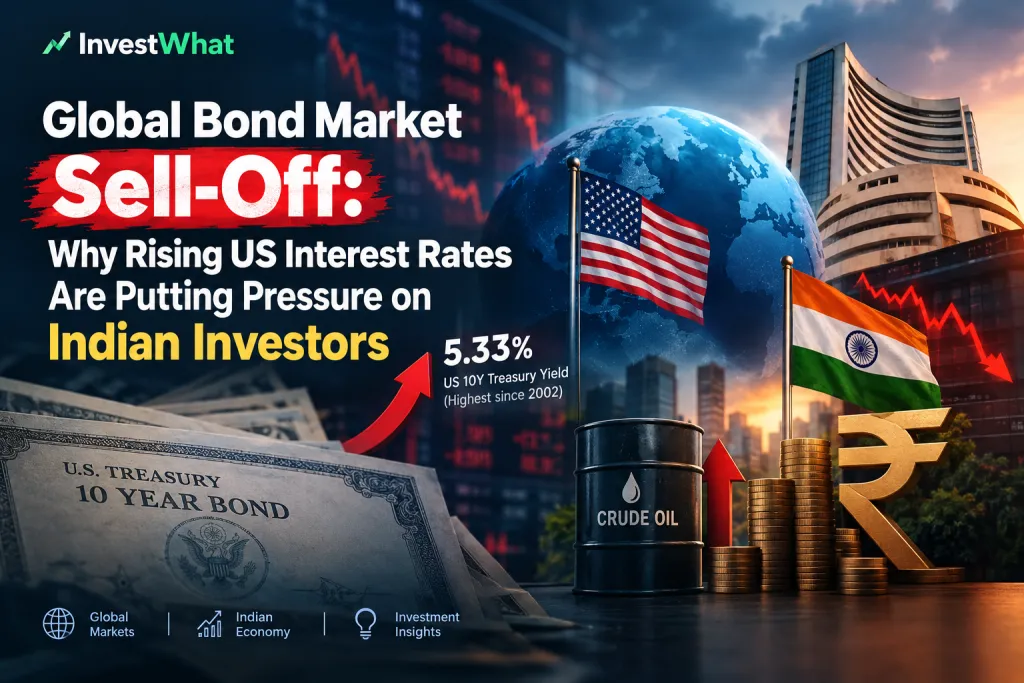
Global financial markets have entered October amid growing uncertainty as rising US bond yields, elevated crude oil prices and inflation concerns put pressure on investors. The US 10-year Treasury yield touched 5.33% on October 1, its highest level since 2002, raising concerns about global borrowing costs and stock market valuations.
Why Are Bond Yields Rising?
Investors are increasingly concerned about persistent inflation, higher energy prices and the possibility of further interest rate hikes. As bond prices fall, their yields rise, making government debt more attractive relative to some riskier investments.
The recent sell-off has also pushed UK long-term borrowing costs to levels not seen in decades, highlighting the global nature of the pressure.
How Is India Being Affected?
The impact is already visible in Indian markets. On October 1, the Sensex fell over 900 points, while the Nifty slipped below 22,400. The Indian rupee also weakened beyond ₹96 against the US dollar, amid elevated crude prices and foreign investor selling.
Higher US yields can make dollar-denominated investments more attractive, potentially reducing foreign investor appetite for emerging markets such as India. A weaker rupee can also increase the cost of imported oil, adding to inflationary pressures.
What Does This Mean for Investors?
The changing global environment could affect different asset classes:
Equities: Higher borrowing costs can weigh on company valuations, particularly for businesses dependent on debt or future growth.
Gold: Inflation, currency movements and interest rate expectations may influence demand and prices.
Bonds: Rising yields can create short-term price losses for existing bondholders, while offering higher yields on newly issued bonds.
Rupee: Continued dollar strength and elevated oil prices may add pressure to the Indian currency.
These are potential market effects, not guaranteed outcomes.
What Should Investors Watch Next?
Investors should monitor US inflation data, Federal Reserve policy signals, crude oil prices, foreign institutional investor (FII) flows and the rupee's movement. India's upcoming RBI monetary policy decision is another important development, with inflation and global interest rate trends influencing expectations.
Conclusion
The global bond market sell-off is a reminder that financial markets are interconnected. Rising US yields can influence investment flows, currency movements and borrowing costs in India. For investors, understanding these developments and maintaining a diversified portfolio can help navigate periods of uncertainty.