India's Cities Are Turning to the Bond Market: Why Municipal Finance Could Be the Next Big Financial Shift
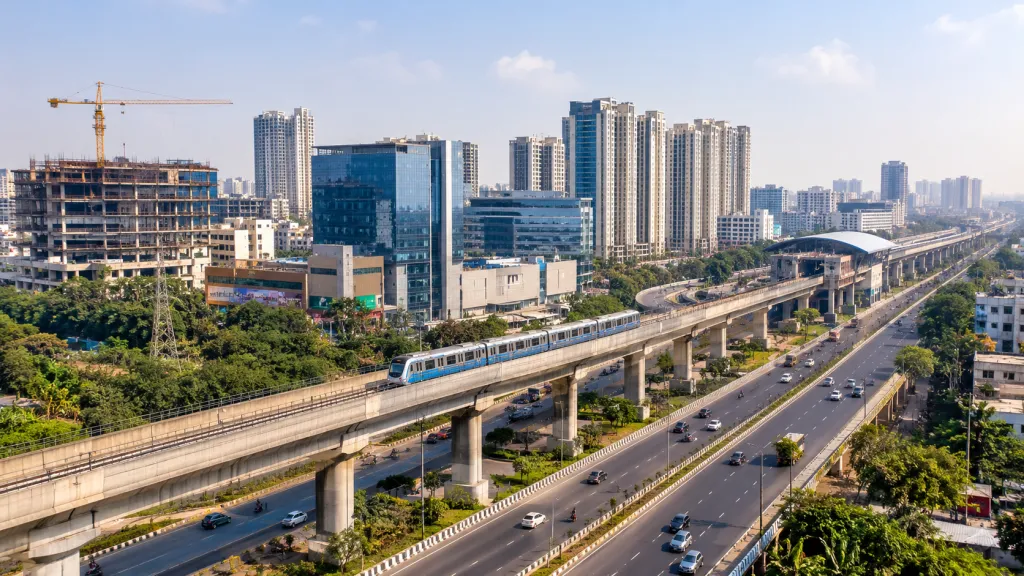
India's financial markets are witnessing a development that could change how cities fund their growth. Instead of depending entirely on government grants and traditional bank loans, municipal corporations are increasingly exploring the bond market to raise money for urban development.
From better roads and water supply systems to public transport, drainage and sanitation, Indian cities require significant capital to support their growing populations. Municipal bonds are emerging as an alternative financing option that could help bridge this funding gap.
The latest development came from Bihar, where Patna Municipal Corporation's first-ever municipal bond issuance was listed on the National Stock Exchange on November 11, 2026. The ₹100.03 crore base issue, along with a ₹99.96 crore green-shoe option, attracted subscriptions of more than twice the base issue size from institutional investors.
This marks an important step for Bihar's municipal finance ecosystem and highlights the growing role of capital markets in funding urban development.
What Are Municipal Bonds?
Municipal bonds are debt securities issued by local government bodies, such as municipal corporations, to raise funds for public infrastructure and development projects.
In simple terms, investors lend money to a municipal body, which agrees to pay interest and return the principal according to the bond's terms.
The funds raised can support projects such as:
Urban roads and bridges
Water supply and sewage systems
Public transportation
Waste management
Drainage and sanitation infrastructure
Unlike equity investments, municipal bonds represent lending rather than ownership in a company or city administration.
Why Are Indian Cities Turning Towards the Bond Market?
India's urban population is growing, and cities need continuous investment to maintain and expand essential services.
Traditional funding sources, including government grants and bank loans, may not be sufficient to meet every city's long-term financial requirements.
Municipal bonds offer another way to mobilise capital while encouraging cities to improve their financial management, transparency and creditworthiness.
According to SEBI, as of March 31, 2026, 22 municipal corporations had raised approximately ₹4,540 crore through 31 municipal debt issuances.
Although the market remains relatively small compared with India's corporate bond market, the increasing number of issuances signals a gradual shift in how urban development is financed.
Government and SEBI Are Supporting the Market
Policy support is becoming an important factor in the development of India's municipal bond market.
The Union Budget 2026–27 introduced a ₹100 crore incentive for cities issuing municipal bonds exceeding ₹1,000 crore. Incentives for smaller issuances of up to ₹200 crore have also continued under the AMRUT framework.
SEBI has also moved towards strengthening the municipal debt securities framework. Its regulatory reforms aim to improve disclosure requirements, provide greater flexibility in fundraising and encourage broader participation in the market.
These changes could make municipal bonds a more structured and transparent source of financing for urban local bodies.
What Does This Mean for Investors?
Municipal bonds introduce another segment to India's debt market.
For investors, they can provide exposure to debt issued by urban local bodies, with returns determined by the bond's coupon, purchase price, maturity and repayment terms.
However, municipal bonds should not automatically be considered risk-free investments.
Investors need to examine:
Credit quality: The financial position and credit rating of the issuing municipal corporation.
Repayment capacity: Whether the issuer has sufficient revenues to meet its obligations.
Interest rates: Changes in market interest rates can affect the value of existing bonds.
Liquidity: Some municipal bonds may have limited trading activity, making it difficult to sell before maturity.
Project performance: The financial structure and cash flows supporting repayment.
It is also important to understand that some municipal bond issuances are privately placed with institutional investors rather than offered directly to retail investors.
Mumbai Could Be the Next Major Development
Another development attracting attention is Mumbai's proposed municipal bond issuance.
The Brihanmumbai Municipal Corporation (BMC) is reportedly planning to raise approximately ₹9,500 crore through a bond sale in early 2027, potentially making it one of India's largest municipal bond offerings.
If the proposed issuance moves forward, it could become an important milestone for India's municipal debt market and encourage other financially stronger cities to explore similar fundraising options.
The scale of such an issuance would also bring greater attention to the financial strength, repayment capacity and governance standards of municipal corporations.
Challenges That Could Slow Down Growth
Despite the opportunities, India's municipal bond market still faces several challenges.
Many smaller cities have limited revenue sources, weak financial reporting systems and lower credit ratings. These factors can make it difficult for them to attract investors.
Limited secondary-market liquidity is another concern. Even when bonds are successfully issued, investors may not always find enough buyers if they want to sell before maturity.
For the market to expand sustainably, municipal corporations will need stronger financial management, transparent reporting and reliable revenue collection systems.
The Bigger Picture
India's municipal bond market represents a gradual shift in the relationship between public development and private capital.
As cities look for alternative ways to finance their expansion, capital markets could become an increasingly important funding channel.
The recent Patna bond listing and the proposed Mumbai issuance suggest that municipal financing is receiving greater attention.
While the market is still at an early stage, its development could create new opportunities for institutional investors, strengthen urban financial management and support the next phase of India's city development.
The bigger question is no longer just how much money Indian cities need to grow, but how effectively they can access and manage that capital.
Disclaimer: This article is for informational and educational purposes only and should not be considered investment advice. Municipal bonds carry credit, interest-rate and liquidity risks. Investors should review the offer document and relevant disclosures before investing.