Trump Meets China's Xi Jinping: How the High-Stakes Summit Could Shape Global Markets and Trade
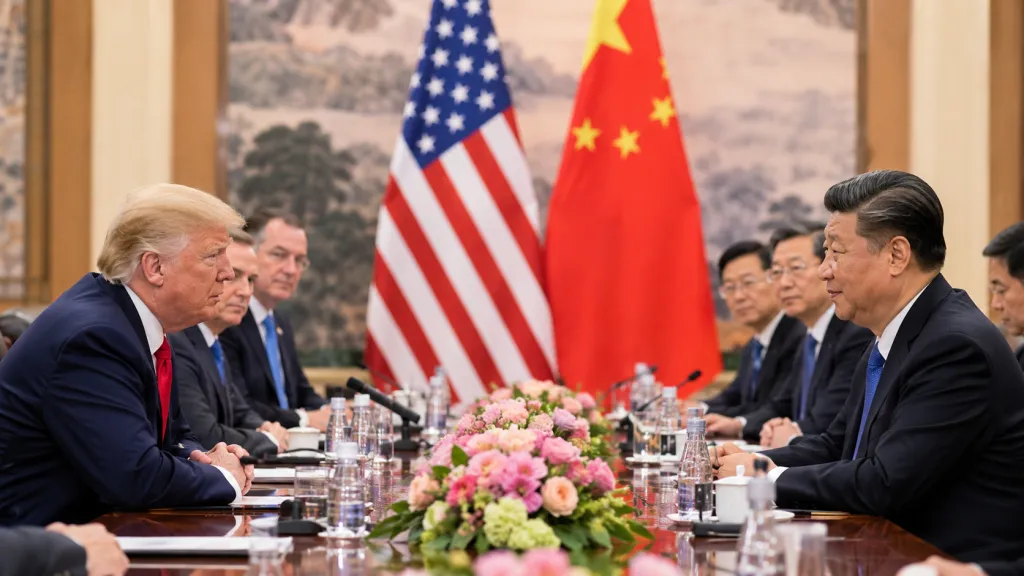
The global financial landscape is closely watching developments from Shenzhen, China, where US President Donald Trump met Chinese President Xi Jinping on November 19 during the Asia-Pacific Economic Cooperation (APEC) Summit. The meeting has attracted international attention as investors look for signs of progress in trade relations between the world's two largest economies.
The discussions come at a crucial time, with tariffs, technology restrictions, agricultural trade and global economic uncertainty continuing to influence international markets.
Trade Relations Take Centre Stage
One of the major talking points during the meeting was the ongoing trade relationship between Washington and Beijing.
Trump highlighted the progress made through the newly established Board of Trade, describing the relationship between the two countries as more balanced. He also pointed to adjustments in tariffs as an important part of the negotiations.
The development follows earlier discussions aimed at reducing trade barriers and improving economic cooperation. However, several important details remain unresolved, meaning investors will be watching for concrete policy decisions rather than diplomatic statements alone.
Why Investors Are Watching the US-China Relationship
The United States and China play a major role in global manufacturing, technology, agriculture and international supply chains. Any improvement or deterioration in their economic relationship can influence businesses and financial markets worldwide.
A reduction in trade tensions could benefit companies dependent on international supply chains, particularly in electronics, manufacturing, automobiles and consumer goods.
On the other hand, renewed tariff disputes could increase production costs, disrupt exports and create uncertainty for multinational companies.
Technology and Semiconductor Sector Remain Important
Technology restrictions are another significant issue in US-China relations.
Access to advanced semiconductor chips, artificial intelligence infrastructure and critical technologies remains a strategic concern for both countries.
For global technology companies, the outcome of these discussions could influence future export policies, manufacturing decisions and investment plans.
Semiconductor manufacturers and companies connected to the global electronics supply chain will remain important sectors to watch as negotiations develop.
What Does This Mean for Global Financial Markets?
The Trump-Xi meeting could have implications across several financial markets:
Stock markets: Improved trade relations could support investor confidence, particularly in export-oriented businesses.
Technology stocks: Any changes in semiconductor export restrictions could affect chipmakers and technology companies.
Agricultural commodities: Progress on agricultural trade could influence international demand and commodity prices.
Currency markets: Changes in trade expectations could affect the US dollar, Chinese yuan and other currencies.
Global investments: Investors may reassess opportunities across US, Chinese and other international markets depending on how trade relations evolve.
However, market reactions will depend on actual agreements, their implementation and the wider economic environment.
The Bigger Picture: Diplomacy Versus Economic Reality
Alongside their bilateral discussions, Trump, Xi and Russian President Vladimir Putin also participated in an unprecedented trilateral meeting during the APEC summit.
The gathering brought additional attention to discussions around international security, nuclear risks and global cooperation. While such diplomatic engagements can influence investor sentiment, they do not automatically translate into immediate economic agreements.
For investors, the key question is whether these high-profile meetings will lead to lasting changes in trade policies and international business relations.
What Should Investors Watch Next?
The coming weeks could be important for understanding the long-term impact of the summit.
Investors should monitor developments around tariff arrangements, semiconductor restrictions, agricultural purchases and future trade negotiations.
Rather than reacting to political headlines alone, investors should focus on how policy changes affect company earnings, international trade and broader economic growth.
The Bottom Line
Trump's meeting with Xi Jinping represents an important moment for global economic relations. While the discussions have created expectations of improved cooperation, significant questions remain around tariffs, technology and trade implementation.
For global investors, the summit is a reminder that political decisions can have a direct influence on financial markets. The real impact, however, will become clearer through the economic decisions that follow.