India’s $43 Billion Smartphone Market Faces 50% Price Shock
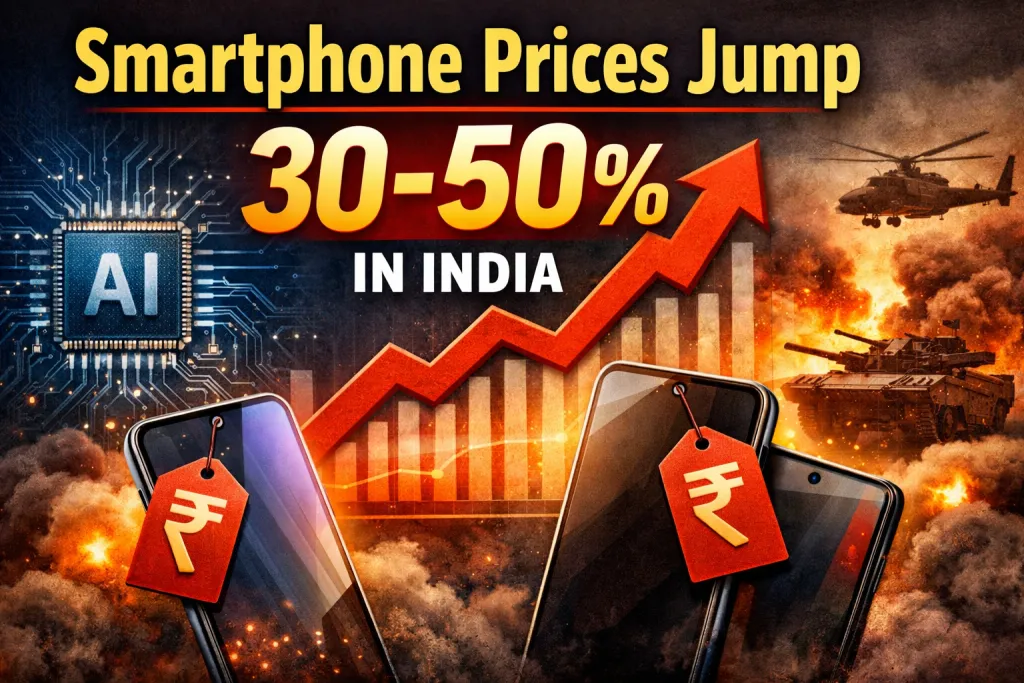
India's smartphone market — the world's second-largest — is experiencing its largest price surge in years. Brands including Vivo, Samsung, Oppo, Xiaomi, and Realme have raised prices across their portfolios by as much as 40–50%, driven by a perfect storm of a global memory chip shortage and rising commodity costs linked to the ongoing conflict in West Asia. For a market already struggling with stagnant demand and saturated consumer sentiment, the timing could not be worse.
A Market Under Siege
India's smartphone market generates sales of over $43 billion annually, making it the single largest electronics category in the country. Yet even before this price wave hit, the market was in a fragile state. Since the pandemic in 2021, India has struggled to revive its smartphone market due to a stagnation of new features and an increasingly saturated market. Brands had been managing single-digit revenue growth by nudging consumers toward premium devices — a strategy that now looks untenable given the scale of the incoming hikes.
Vivo, Samsung, and Oppo accounted for 47% of the 152 million smartphones sold in the country last year, according to data from IDC India. Taking Realme and Xiaomi into account, these five brands represent two-thirds of all smartphones sold in India every year — meaning the current price increases are not isolated incidents but a sweeping, market-wide shift with consequences for hundreds of millions of Indian consumers.
What Is Driving the Price Hikes?
Two distinct global disruptions have converged to upend smartphone economics in India.
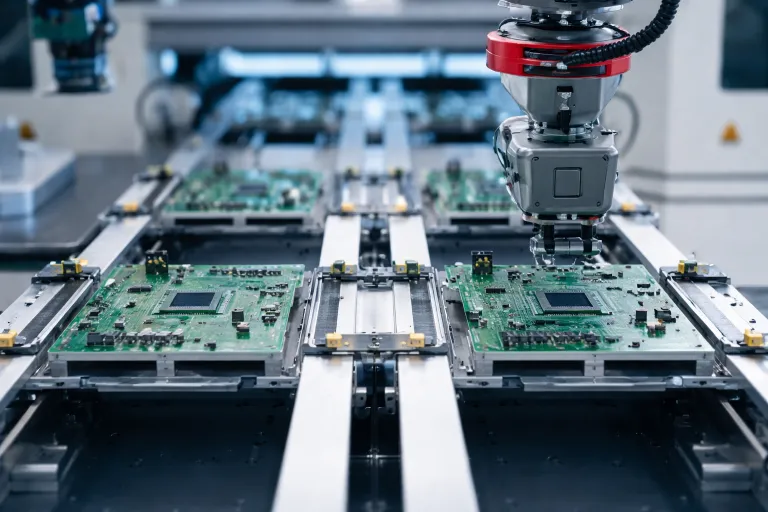
The first is the AI-driven memory chip shortage. The insatiable demand for artificial intelligence infrastructure — led by companies like Nvidia prioritising data centre chips — has drastically reduced the supply of smartphone-grade memory components. Memory chip prices for smartphones have gone up by over 120% from December to February, according to Tarun Pathak, director for research at Counterpoint India. The ripple effects on device costs have been severe: the cost of a memory chip is now up to almost 40% of a smartphone's bill of materials, compared to about 18% before. For a ₹15,000 device, this alone represents thousands of rupees in additional input cost — and brands have begun passing that burden squarely onto consumers and retail networks.
The second disruptor is the West Asia conflict. Most of the current price hikes are due to rising memory chip costs, while some are attributable to rising commodity costs, such as plastic used for moulding in phones, due to the West Asia war, according to Kailash Lakhyani, founding chairman of the All-India Mobile Retailers Association. The war has pushed up logistics costs and raw material prices, further inflating the cost of manufacturing devices. When combined with the chip shortage, manufacturers are facing margin pressures across every component of a smartphone's bill of materials.
The Scale of the Hikes
The numbers are stark. Vivo's budget T4 Lite smartphone, which previously started at ₹9,999, currently retails at ₹13,999 — a 40% increase. Samsung's Galaxy A56, which previously cost ₹47,999, currently retails at ₹62,499 under the 'A57' moniker — a price hike of 30%. It's Galaxy A36, relaunched as the 'A37' on 25 March, now retails at ₹52,999, up from ₹38,999 — a 36% increase. Oppo India has raised prices on five models, while Xiaomi increased prices of six smartphones by up to 32% through March, and Realme raised prices on nine of its models by up to 50%, including its sub-₹10,000 C71 4G.
These are not marginal adjustments. They represent a fundamental repricing of the accessible smartphone segment — the very segment that drives volume in a price-sensitive market like India.
No Relief in Sight
Retailers have already been told that the current price hikes are not only permanent, but that further price increases will come through in the coming quarters. The structural cause of the shortage — AI demand cannibalising memory chip supply — is not expected to resolve quickly. As per communications received by retailers, brands have informed them that there is no near-term respite, and further price hikes are likely as memory chip prices are unlikely to reduce before the first half of 2027.
The market impact is expected to be significant. The current price increases could lead to a drop of almost 10% in annual smartphone sales in India, according to Navkendar Singh, associate vice-president at IDC India, who added that smartphone makers are raising prices because component suppliers are catering to the high-demand AI memory chips — a dynamic unlikely to change in the near term.
Consumers, meanwhile, are already under financial strain from an unrelated direction. The West Asia war has ensured that consumers are spending money only on necessary commodities as the cost of fuel and cooking gas shoot upward. Discretionary purchases — including smartphone upgrades — are being postponed or abandoned entirely. With prices rising steeply, buyers are looking at the second-hand market or are opting for temporary repairs to prolong their smartphone usage cycle instead of buying new ones.
The "AI Tax" on Indian Consumers
What is unfolding in India is, in many ways, a microcosm of a global trend. The explosive capital flowing into AI infrastructure is reshaping supply chains far beyond the data centre. Consumer electronics — especially smartphones — are bearing the downstream cost of a technology revolution they are not directly part of. The ordinary Indian consumer upgrading from a two-year-old budget phone is, in effect, subsidising the memory requirements of large language models and GPU clusters halfway across the world.
India, as the second-largest smartphone market globally, absorbs this "AI tax" more acutely than most. The country's market is disproportionately skewed toward the sub-₹20,000 segment — precisely where the percentage price hikes have been the sharpest. Premium consumers upgrading to flagships have more elastic budgets. It is the first-time buyer in a Tier-2 city and the student upgrading from a feature phone who will feel this most keenly.
Singh added that no party — component makers, brands, or retailers — is currently willing to sacrifice on margins in order to revive consumer demand. Without some party willing to compromise, the market is likely to be at a standstill through this year.
So, below here could be the two stocks that might be feeling the heat
Dixon Technologies: Poised to Gain, but Not Without Risks
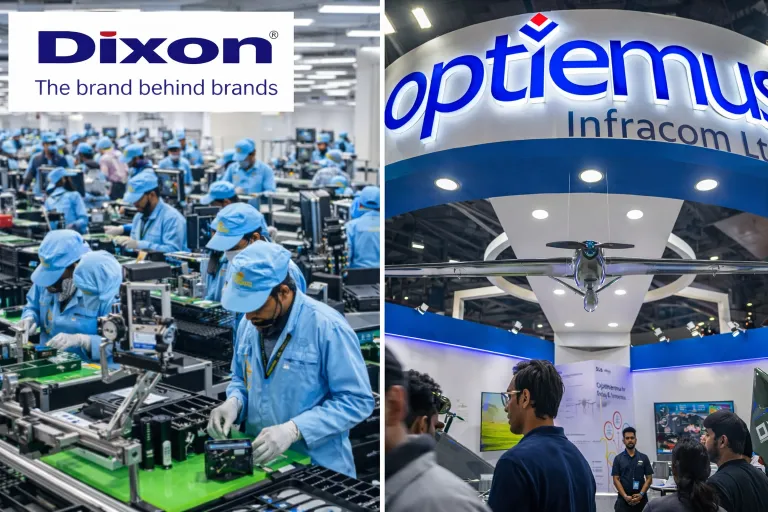
In any disruption to the imported smartphone ecosystem, Dixon Technologies — India's largest contract electronics manufacturer — stands out as a potential beneficiary. The company, which manufactures devices for brands including Motorola, Nokia, and several Chinese brands operating in India, could see increased interest from brands looking to localise production and reduce exposure to global supply chain volatility. If brands decide that local assembly of smartphones can buffer against import-driven cost inflation, Dixon is the most natural partner for that shift.
However, Dixon is not insulated from the same memory chip pressures that are squeezing the brands it serves. As a contract manufacturer, it operates on thin margins and largely passes component costs through to its brand partners. If final demand for smartphones drops by the projected 10%, Dixon would see a corresponding volume decline in its consumer electronics division. The company's fortunes remain closely tied to overall market health — and a sustained slowdown in smartphone volumes would weigh on its revenue trajectory even as its strategic positioning improves.
Optiemus Infracom: A Turning Point for Domestic Assembly
Optiemus Infracom enters this turbulent market backed by a significant strategic bet — a $100 million joint venture with Nothing Electronics, where Optiemus holds a 65% stake, with India as the base for manufacturing and operations for both Nothing and its sub-brand CMF. The JV, now formalised as 'The Factory Private Limited', is already in expansion mode. On paper, this positions Optiemus well — CMF competes in the budget-to-mid-range segment where imported rivals are now raising prices by 30–50%, potentially opening the door for domestically assembled devices to grab share.
But the opportunity cuts both ways. Memory chip costs — the primary driver of the current price shock — do not spare domestic assemblers. Optiemus will face the same input cost inflation as every other player, which will pressure margins on CMF devices and could force price increases that undercut the JV's competitive positioning. With Nothing and Optiemus having committed over $100 million to building India into a global production and export hub, a sustained demand slowdown — projected at a 10% drop in annual smartphone sales — would weigh heavily on volume targets and the timeline to make that investment pay off.
The Bottom Line
In the near term, India’s smartphone market finds itself caught between two powerful global forces — the relentless rise of AI and the economic ripple effects of geopolitical conflict. While manufacturers and assemblers adjust strategies to protect margins, the burden is ultimately shifting toward consumers. What makes this phase particularly critical is not just the scale of price increases, but the structural nature of the disruption. Unlike cyclical cost pressures, the AI-led demand for chips appears long-term, suggesting that elevated pricing may become the new normal rather than a temporary spike.
For investors, this creates a nuanced landscape. Companies like Dixon Technologies and Optiemus Infracom may benefit from localisation trends and strategic partnerships, but their growth will remain closely tied to overall demand recovery. Until affordability improves or supply constraints ease, volume growth is likely to stay under pressure.
In many ways, this moment could redefine how India’s smartphone market evolves — from a high-volume, price-sensitive ecosystem to one shaped increasingly by global technology cycles. And for millions of consumers, the next upgrade may no longer be a routine decision, but a carefully delayed one.