Market Morning Brief: Nifty Reclaims 22,500 as RBI MPC Begins, Oil Eases
3-minute read
Indian equities opened higher on Monday as easing crude prices, stronger Asian markets and softer expectations around further US monetary tightening improved risk sentiment. The rebound follows the Nifty 50 and Sensex posting their eighth consecutive weekly decline, their longest losing streak in 25 years.
The Nifty moved back above 22,500 in early trade, while the Sensex gained more than 450 points before moderating. Financial and IT stocks led the recovery, although continued foreign selling, a weak rupee and elevated global bond yields remain key risks for the market.
Nifty Attempts a Relief Rally
The Nifty 50 opened around 22,532 and moved above 22,550 in early trading, while the Sensex climbed above 72,350. Thirteen of the 16 major sectoral indices were trading higher, with financial stocks among the strongest performers. Mid-cap and small-cap stocks also participated in the rebound.
The recovery comes after a sharp correction that has pushed the benchmark into technically weak territory. The Nifty closed at 22,421.95 on October 1 after falling 0.88%, with the 22,200-22,000 area emerging as an important downside reference.
For the current rebound, holding above 22,500 could provide near-term stability. A sustained move towards the 22,750-22,850 region would strengthen the recovery signal, while a failure to hold 22,500 could bring selling pressure back into focus.
RBI MPC Takes Centre Stage
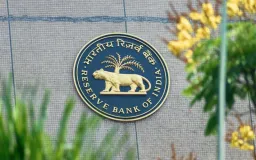
The biggest domestic event this week is the Reserve Bank of India's Monetary Policy Committee meeting, which begins on October 5 and concludes on October 7.
The repo rate currently stands at 5.25%, after the MPC kept it unchanged at its August meeting while maintaining a neutral policy stance. Market consensus favors another rate hold at 5.25%. However, with August retail inflation rising to 4.82%, elevated crude prices and a weak rupee, market participants are closely watching for hawkish guidance or a potential 25-basis-point rate hike.
The policy statement will therefore be important beyond the headline rate decision. Investors are likely to focus on the RBI's assessment of inflation, currency conditions, oil prices, liquidity and economic growth. A more hawkish tone could weigh on rate-sensitive sectors, while a neutral stance could provide additional support to the current market rebound.

FII Selling Remains a Major Headwind
Foreign institutional selling continues to challenge the market despite strong domestic buying.
On October 1, foreign investors sold approximately ₹9,484 crore of Indian equities, while domestic institutional investors bought around ₹10,042 crore. The domestic flows more than absorbed the foreign selling on the day, but the persistent FII outflows have continued to pressure benchmark indices.
September was particularly weak for Indian equities, with foreign investors withdrawing around ₹46,000 crore from the market. The combination of overseas selling, higher global yields and a weaker rupee remains a key obstacle to a sustained recovery.
Banks Lead the Recovery
Financial stocks were among Monday's strongest performers after several lenders released positive quarterly business updates.
Bajaj Finance gained sharply after reporting an 11% year-on-year increase in new loans during the September quarter. HDFC Bank also advanced after announcing Anup Bagchi as its next chief executive for a three-year term.
Public-sector lenders including Punjab National Bank and Bank of Baroda also gained after reporting strong growth in quarterly advances. PNB reported a 14.8% increase in global advances, while Bank of Baroda reported an 18% increase.
IT Stocks Get a Boost
IT stocks also participated in the recovery, with the Nifty IT index gaining after stronger-than-expected guidance from global technology services company Accenture.
The positive outlook has helped ease concerns about weak technology spending and the potential impact of artificial intelligence on traditional IT services. Several Indian IT stocks moved higher in early trade as investors responded to the improved global technology outlook.
Oil Eases, Rupee Remains Near ₹96
Brent crude slipped to around $101.90 a barrel, while WTI traded near $90.50. The decline in oil prices offers some relief to India, one of the world's major oil-importing economies.
The rupee remained close to ₹96 per dollar, however, keeping currency weakness on investors' radar. Higher crude prices, foreign capital outflows and elevated global yields continue to create pressure on the currency.
What Indian Traders Are Watching Today
Monday's rebound provides some relief after eight consecutive weeks of declines, but the broader market trend remains fragile.
The RBI policy decision on October 7, FII flows, crude oil prices, the rupee and global bond yields will be the key factors influencing Indian equities this week.
For today's session, the Nifty's ability to hold above 22,500 will be important. A sustained move through 22,750-22,850 could strengthen the relief rally, while a return below 22,500 would suggest that selling pressure remains dominant.
This article is for educational and informational purposes only and does not constitute investment, trading or financial advice. Leveraged products involve substantial risk and may not be suitable for all investors. Availability and legality of financial products vary by jurisdiction. Readers in India should ensure that any foreign-exchange or derivative activity is conducted in accordance with applicable RBI, FEMA and SEBI requirements.