India’s Semiconductor Future: How the Chip Industry Could Transform India’s Economy and Stock Market
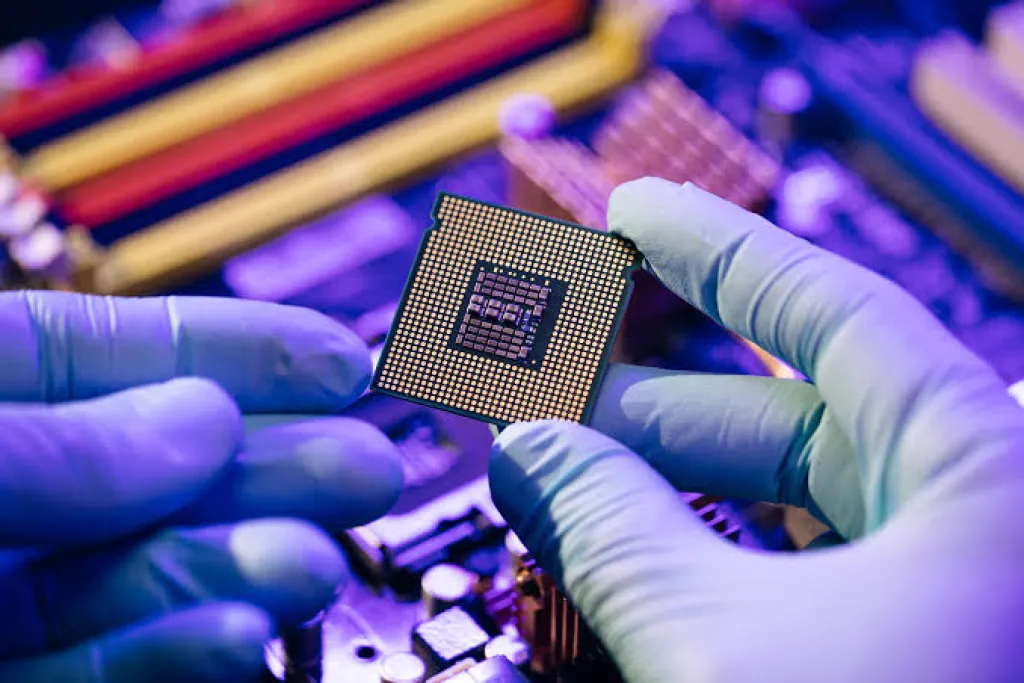
Semiconductors may be tiny, but they are becoming one of the biggest strategic industries in the global economy. From smartphones and electric vehicles to artificial intelligence, defence systems, telecom networks and data centres, almost every modern technology depends on semiconductor chips.
For India, the semiconductor industry represents more than just another manufacturing opportunity. It could help the country move higher up the global technology and manufacturing value chain, attract large foreign investments, create high-skilled jobs and reduce dependence on imported chips.
India has already started building this ecosystem, and the momentum has accelerated in 2026 with Semicon 2.0, increased investments and the beginning of commercial production at multiple semiconductor facilities.
So, what could India's semiconductor future look like, and how could it affect the Indian economy and stock market?
India’s Semiconductor Industry: Where Does the Country Stand?
India has traditionally been a major consumer and designer of semiconductor technology but has had limited domestic manufacturing capacity.
That is now changing.
Under the Semicon India Programme, the government has approved semiconductor projects involving around ₹1.6 lakh crore of investment. By September 2026, five semiconductor manufacturing facilities had commenced commercial production, according to the government.
The projects cover several parts of the semiconductor value chain, including:
Semiconductor fabrication
Assembly, testing and packaging
Chip design
Compound semiconductors
Display-related semiconductor technology
Semiconductor materials and equipment
Major companies involved include Tata Electronics, Micron, CG Power and Kaynes Semicon.
The government has also approved Semicon 2.0 with an outlay of ₹1,27,500 crore, with a broader focus on design, manufacturing, materials and machines, research and development, talent and additional fabs and packaging facilities.
Why Does Semiconductor Manufacturing Matter for India?
India already has a large electronics and technology ecosystem. The next step is to increase the amount of value created domestically.
For example, assembling a smartphone in India creates economic activity, but producing more of its critical components domestically can create additional value through manufacturing, engineering, materials, logistics and technology development.
This is where semiconductors become important.
According to industry estimates cited by IBEF, India's semiconductor demand could reach around $103 billion by 2030, compared with approximately $50–52 billion around 2024–25.
That growing domestic demand creates an opportunity for India to develop both a large semiconductor market and a domestic manufacturing ecosystem.
How Semiconductors Could Impact the Indian Economy
1. More Foreign and Domestic Investment
Semiconductor manufacturing requires enormous amounts of capital.
India's approved projects already represent investments running into hundreds of thousands of crores. Tata Electronics' Gujarat semiconductor fab alone has an approved investment of about ₹91,526 crore, while its Assam OSAT facility has an investment of around ₹27,120 crore.
Such investments can create economic activity well beyond the semiconductor factories themselves.
Construction companies, engineering firms, equipment suppliers, logistics providers, industrial infrastructure companies and other supporting businesses can benefit from the expansion.
2. Creation of High-Skilled Jobs
Semiconductor manufacturing requires specialised engineers, technicians, researchers and production professionals.
India already has a significant advantage in chip design and engineering talent. Government data says more than 67,000 engineers and chip designers across institutions and startups have gained access to industry-grade Electronic Design Automation tools.
As manufacturing capacity grows, demand could increase for expertise in:
Semiconductor design
Electrical engineering
Materials science
Chemical engineering
Automation
Robotics
Equipment maintenance
Quality control
Packaging and testing
Semiconductor research
This could gradually create a larger high-value technology workforce in India.
3. Growth of the Electronics Manufacturing Ecosystem
A semiconductor fab cannot operate in isolation.
It needs specialised chemicals, gases, equipment, packaging materials, clean-room infrastructure, precision machinery, power and water infrastructure, testing facilities and logistics.
This means the semiconductor push could create opportunities for an entire ecosystem of suppliers.
India's policy focus is increasingly moving in this direction. ISM 2.0 specifically includes semiconductor materials and machines as one of its strategic areas.
4. Lower Dependence on Overseas Supply Chains
India imports a large portion of the semiconductor components required by its electronics and manufacturing industries.
Building domestic capabilities does not mean India will immediately become completely self-sufficient. Semiconductor manufacturing is highly globalised, and even major semiconductor nations depend on international supply chains.
However, domestic manufacturing and packaging capacity can provide India with greater supply-chain resilience.
This becomes particularly important during periods of geopolitical tensions, trade restrictions or global chip shortages.
How Could India’s Semiconductor Growth Affect the Stock Market?
The semiconductor boom could affect the Indian stock market in several ways.
However, investors should remember that industry growth does not automatically translate into higher stock prices. Company valuations, execution, debt, margins, competition and market expectations also matter.
Semiconductor and Electronics Companies
Companies directly involved in semiconductor manufacturing, packaging, testing and electronics could receive greater investor attention as India's semiconductor ecosystem expands.
Companies such as Tata Electronics are privately held, while listed companies connected to the semiconductor and electronics ecosystem may provide public-market exposure.
CG Power, for example, has been involved in India's semiconductor manufacturing push through its OSAT project in Gujarat.
Kaynes Technology is another company involved in semiconductor packaging and electronics manufacturing.
But investors need to distinguish between a company's semiconductor exposure and its overall business. A company participating in the semiconductor ecosystem may still generate most of its revenue from other businesses.
Capital Goods and Industrial Companies
Semiconductor facilities require sophisticated industrial infrastructure.
That can create opportunities for companies involved in:
Industrial automation
Electrical equipment
Engineering
Construction
Power infrastructure
Water management
Clean-room systems
Industrial machinery
Therefore, the impact may spread beyond companies directly producing chips.
Electronics and Consumer Technology
A stronger domestic semiconductor ecosystem could also support India's broader electronics manufacturing ambitions.
India's electronics production has already expanded substantially. Government data shows electronics production increased from approximately ₹1.9 lakh crore in 2014–15 to around ₹12 lakh crore in 2024–25.
More domestic semiconductor capacity could strengthen this ecosystem further.
Could Semiconductor Growth Increase India’s GDP?
Potentially, yes.
The semiconductor industry can contribute to economic growth through several channels:
Investment → Manufacturing → Jobs → Supplier ecosystem → Exports → Technology development
The impact is therefore larger than the value of chips manufactured inside factories.
For example, a new semiconductor facility can generate demand for construction, equipment, logistics, engineering services, utilities and skilled labour.
Over time, successful domestic semiconductor manufacturing could also help India capture a larger share of the global electronics value chain.
India's NITI Aayog has described semiconductors as strategically important for economic resilience, digital infrastructure, defence, AI, telecommunications and advanced manufacturing.
India Could Also Become a Global Chip-Design Hub
Manufacturing is only one part of the semiconductor industry.
India already has a strong presence in chip design, largely because of its engineering and technology talent.
The next opportunity is to move from primarily providing engineering services for global semiconductor companies toward developing more Indian semiconductor intellectual property and products.
This is one of the objectives of Semicon 2.0, which includes support for full-stack Indian semiconductor IP and chip design.
If Indian companies successfully develop globally competitive chip designs, the economic value captured by the country could be significantly higher than simply assembling or packaging chips.
The Biggest Challenges for India
India's semiconductor opportunity is significant, but building a globally competitive chip industry will not be easy.
High Capital Requirements-Semiconductor fabs require billions of dollars of investment and sophisticated infrastructure.
Technology Complexity-Advanced semiconductor manufacturing requires highly specialised equipment, materials and processes.
Global Competition-India is competing with established semiconductor ecosystems in Taiwan, South Korea, the United States, Japan, China and other countries.
Skilled Workforce-The industry needs specialised talent in areas such as semiconductor process engineering, materials science, equipment engineering and advanced chip design.
Supply Chain Development
A successful semiconductor ecosystem requires much more than fabs. India will also need reliable suppliers for equipment, gases, chemicals, materials and other components.
This is why India's semiconductor strategy is increasingly focused on developing the ecosystem around manufacturing rather than simply building individual factories.
What Could India’s Semiconductor Industry Look Like by 2030?
If current projects are successfully executed, India could have a much stronger semiconductor ecosystem by the end of the decade.
The likely transformation could include:
More chip packaging → More semiconductor manufacturing → More electronics production → More component suppliers → More exports → More skilled jobs
Industry estimates suggest India's semiconductor demand could reach roughly $100–110 billion by 2030.
The government's longer-term ambition is even broader. Semicon 2.0 is designed to develop capabilities across design, manufacturing, materials, equipment, research and talent.
What Does This Mean for Indian Investors?
For investors, India's semiconductor story is likely to be a long-term structural theme rather than a short-term market trend.
Instead of looking only at companies that manufacture chips, investors may also need to understand the wider ecosystem.
Potential areas of interest include:
Semiconductor manufacturing
OSAT and advanced packaging
Electronics manufacturing
Chip design
Industrial automation
Capital goods
Power infrastructure
Engineering services
Semiconductor equipment
Specialty materials
But sector growth should not be treated as a guarantee of returns.
Investors should examine individual companies' financial statements, valuations, debt levels, order books, execution capability and actual semiconductor exposure before making investment decisions.
The Bigger Picture
India's semiconductor ambitions are ultimately about more than chips.
They are about moving from being primarily a large consumer of technology to becoming a larger producer and creator of technology.
The country already has a strong technology workforce, a large domestic electronics market and an expanding manufacturing base. The semiconductor push attempts to connect these strengths with domestic manufacturing capabilities.
The results will not appear overnight. Semiconductor projects take years to build, qualify and scale. The industry is also highly capital-intensive and technologically demanding.
But if India successfully develops capabilities across chip design, fabrication, packaging, materials, equipment and research, the semiconductor sector could become an important contributor to India's manufacturing growth, technology ecosystem, employment and global trade over the next decade.
Final Takeaway
India's semiconductor story is still in its early stages, but the direction is clear: from chip consumption to chip manufacturing, design and eventually deeper participation in the global semiconductor value chain.
For the Indian economy, that could mean more investment, skilled employment, manufacturing capacity, exports and technology development.
For the stock market, it could create opportunities across semiconductors, electronics, capital goods, engineering and supporting industries—but the performance of individual stocks will still depend on company-specific fundamentals.
India may not become a semiconductor superpower overnight. But the foundations being built today could determine how significant India's role in the global chip industry becomes by 2030 and beyond.