Dollar Plunge: Yen Surges on Weak US Data and Japan Election Win
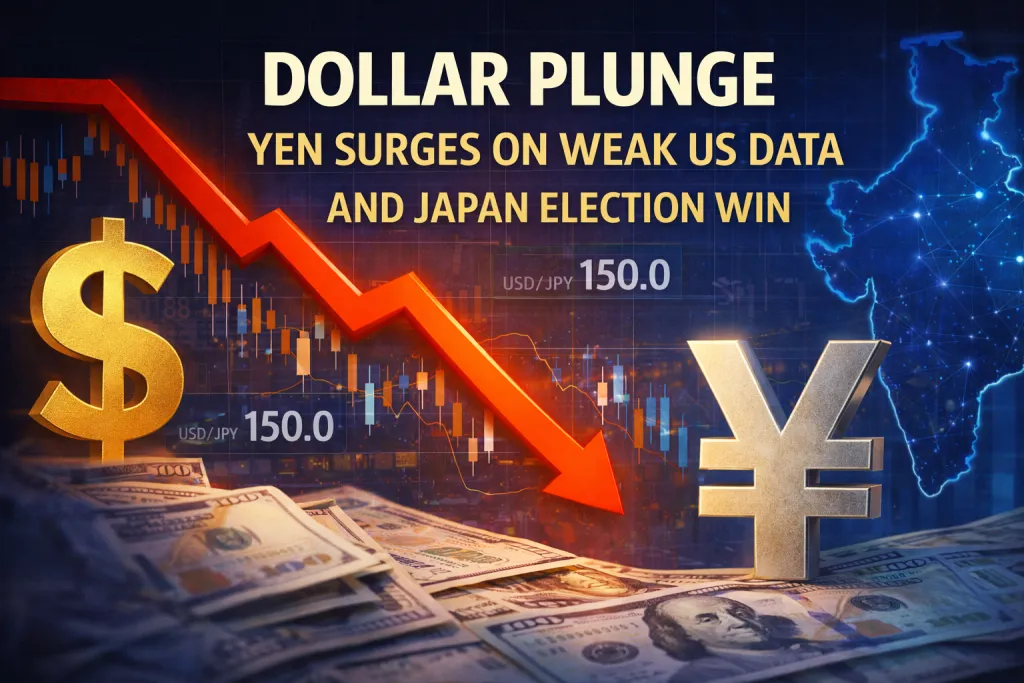
According to Bloomberg on 11th February 2026, the dollar dropped all its major peers as investors ramped up bets on Federal Reserve interest-rate cuts following fresh signs of weakness in the US economy. Bloomberg's gauge of the US currency fell for a fourth day, with the yen leading major peers higher following Japan’s recent election, after softer than forecast retail sales data published Tuesday reinforced the case for more Fed easing. Concerns ahead of US payrolls data due Wednesday and inflation numbers on Friday are giving traders further reason to trim dollar positions. According to The Japan Times, Prime Minister Sanae Takaichi’s Liberal Democratic Party secured a historic landslide victory in Sunday’s Lower House election with NHK projections showing the party securing a two-thirds supermajority in the 465 seat Lower House by itself. Together with its coalition partner, the Japan Innovation Party (JIP), the bloc had won 352 seats, significantly expanding its majority of 233. This will essentially allow the LDP-led coalition to override challenges that emerge as a result of its lack of a majority in the Upper House. In the event key bills and budgets are voted down in the Upper House, they can be overridden in the Lower House with a two-thirds majority. The outcome was reminiscent of a 2012 election, when the LDP, after a disastrous 2009 poll in which it lost power, regained its control of the Lower House by winning 294 seats. That victory served as the launchpad of former Prime Minister Shinzo Abe’s performance in a Lower House election in 1986, when the Upper House election was held simultaneously during which it secured 300 seats under then President Yasuhiro Nakasone. Yu Uchiyama, a political science professor at the University of Tokyo, said Takaichi’s high popularity was largely behind the LDP’s huge win. “Takaichi becoming Japan’s first female prime minister gave her a very fresh, new image,” he said. “Meanwhile, the CRA, even down to its party name, came across as somewhat old fashioned, or dated, and that likely made it harder for the party to appeal to voters. With the two-thirds majority, the government now has the option to pursue aggressive parliamentary tactics by overriding an Upper House decision through a second vote in the Lower House. But although broadly popular agenda such as consumption tax cuts for food might gain opposition support easily, more contentious items including Takaichi’s long championed anti espionage legislation are likely to see resistance from opposition parties, Uchiyama said.
“The relative rates story is back in play with soft US economic data encouraging investors to price in greater chance of further Fed rate cuts.” said David Forrester, a strategist at Credit Agricole in Singapore. “The yen remains one of the Group of 10 currencies the most sensitive to relative rates and is receiving the additional boost of the long end of the Japan government bond curve being well behaved post the Lower House election.” Hedge funds positioned for US payroll data by buying dollar-yen option structures that will gain in value if the pair keeps dropping, traders said. They also purchased the Aussie against the greenback in spot markets.
Three things happened simultaneously.
Weak US economy signals: Tuesday's US retail sales data came in lower than expected, showing consumers are spending less. This raises fears of a slowdown, making investors bet the Federal Reserve (Fed) will cut interest rates soon to stimulate growth. Lower rates make the dollar less attractive to hold, so its value drops. Japan's election boost: Prime Minister Sanae Takaichi's Liberal Democratic Party won a huge majority in Sunday's Lower House election. This gives her government strong control to pass laws easily, even overriding the Upper House. Political stability boosts confidence in Japan, strengthening the yen. Trader bets ahead: With US jobs data due Wednesday and inflation Friday, markets expect more signs of US weakness. Traders are selling dollars, buying yen (and others like the Aussie dollar), pushing USD/JPY lower.
US retail sales unexpectedly stalled in December, Commerce Department data showed, indicating consumers provided less support for the economy as the year drew to a close. Swap markets are pricing in over two quarter point rate cuts by the US central bank this year ahead of the employment data. The Australian dollar advanced as much as 0.8% versus the green back as traders positioned for the central bank to raise borrowing costs after Deputy Governor Andrew Hauser said inflation is still “too high.”
Bloomberg Strategists say, “Aussie gains are inspiring broader sell signals for the US dollar with yen, euro, and New Zealand’s currency among those enjoying the ride.” Mark Cranfield, Markets Live Strategist. US employers probably added 65,000 workers in January, according to a Bloomberg survey of economists, an outcome that would be the biggest job gain in four months.
According to an article by GuruFocus, Japanese officials added to the sense that policy coordination is becoming more explicit. Japan’s top currency official Atsushi Mimura said authorities would respond with close cooperation with Washington, echoing earlier comments from Prime Minister Sanae Takaichi warning that the government was prepared to act. Strategists noted that any perception of US involvement could reinforce near term dollar weakness, particularly if markets view coordination as a signal that easier global dollar conditions may be tolerated. This renewed focus on currencies comes after a surge in Japanese bond yields unsettled global fixed income markets, adding to volatility already driven by unpredictable US policy making, tariff tensions with Europe, and renewed concerns over another potential US government shutdown.
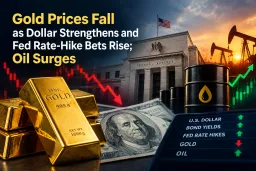
Safe-haven assets like gold and silver are surging as investors seek protection amid global worries. Meanwhile, oil prices are ticking up slightly, and US stocks are dipping ahead of key economic updates.
Gold Hits Historic Milestone
Gold prices broke through $5,000 per ounce for the first time ever. This continues a strong rally driven by geopolitical tensions, think ongoing conflicts and trade disputes and growing caution around government bonds and shaky currencies. When the world feels unstable, investors flock to gold as a reliable store of value that holds up when stocks or cash falter. For context, gold was hovering around $2,000 just a couple of years ago, showing how dramatically uncertainty has boosted demand.
Silver Smashes Records Too
Silver followed suit, reaching a fresh all-time high after topping $100 per ounce in the prior trading session. Unlike gold, silver benefits from robust buying by everyday retail investors, plus its use in solar panels, electronics, and jewelry. This dual role as a precious metal and industrial commodity makes it extra sensitive to both safe haven flows and economic recovery hopes. The jump reflects similar fears: people want assets that aren't tied to volatile fiat currencies or bonds.
Oil Climbs Amid Mixed Signals
Brent crude oil edged higher, trading above $66 per barrel. While not a massive move, it signals steady demand expectations despite economic headwinds. Factors like Middle East tensions and potential supply disruptions from weather or geopolitics are providing a floor under prices. Traders are balancing weaker global growth outlook against these risks.
Stocks Slip on Big Week Ahead
US stock futures fell as markets brace for a crucial stretch. The Federal Reserve meets this week and is expected to hold interest rates steady, no cuts or hikes for now. Investors are also eyeing earnings reports from tech giants like Microsoft and Tesla, which could sway sentiment on corporate health. Any signs of slowing consumer spending or AI hype fading might amplify the caution.
Why Commodities Are Winning
Overall, experts see this mix of geopolitical risks (wars, elections), policy fog (Fed path, tariffs), and currency swings (dollar drop vs. yen) pushing money into commodities. It's a diversification play: when dollars feel risky and bonds feel wobbly, gold, silver, and oil look like smarter bets to preserve wealth. This trend could stick around if uncertainties linger.
This article is for informational purposes only and does not constitute investment or financial advice. Readers should consult a SEBI-registered financial advisor before making investment decisions.