AC Sales Hit by Cool Summer Start: Temporary Dip or Demand Delay?
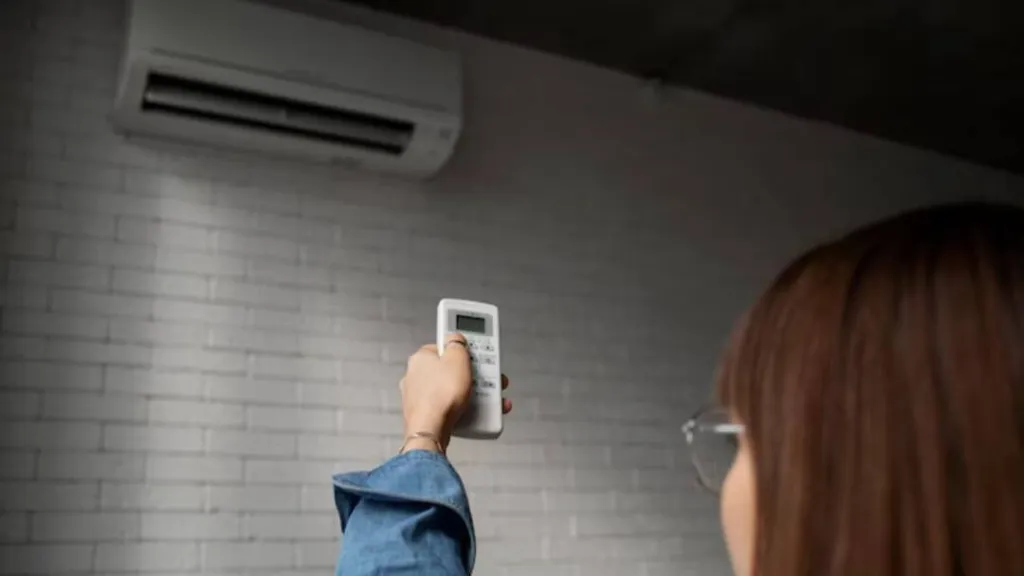
The Indian consumer durables sector, particularly air conditioner (AC) manufacturers, has started the summer season on an unexpected note. A recent report highlights that unseasonal rains and cooler temperatures across North India have impacted AC sales, raising concerns about near-term demand. However, industry players remain confident that this is only a temporary disruption rather than a structural slowdown.
This development offers more than just a seasonal update—it provides a deeper insight into how weather patterns, pricing dynamics, and consumer behavior intersect to influence sectoral performance.
A Weak Start to the Summer Season
Typically, the Indian AC industry depends heavily on the April–June period, which contributes a significant portion of annual sales. However, this year, North India witnessed an unusually cool start to summer, with regions like Delhi, Punjab, and Haryana experiencing rainfall and lower-than-expected temperatures.
This directly impacted demand for cooling appliances. Unlike many other consumer goods, AC purchases are highly temperature-sensitive and discretionary. A delay in heatwaves often leads to the postponement of purchases rather than outright demand destruction.
Industry estimates suggest that North India accounts for nearly 35–40% of total AC sales, making it a critical region. As a result, even a short-term disruption in this geography can reflect in overall industry numbers.
Regional Divergence: Not a Nationwide Slowdown
While North India faced subdued demand, the situation was notably different in other parts of the country. Southern and Eastern regions, where temperatures rose earlier, continued to witness healthy demand trends.
This highlights an important point—the slowdown is regional, not structural. Demand has not disappeared; it has simply become uneven across geographies.
For companies, this creates operational challenges such as inventory allocation, logistics adjustments, and pricing strategies, but it does not necessarily alter long-term growth prospects.
Industry Confidence Remains Intact
Despite the initial setback, companies such as Godrej Enterprises Group have indicated that the dip is temporary. The underlying assumption is that as temperatures rise in the coming weeks, pent-up demand will return.
This confidence is backed by historical trends. In previous years, delayed summers have often resulted in compressed demand cycles, where sales accelerate sharply once temperatures spike.
For instance, during years with late heatwaves, the industry has seen double-digit growth in peak months, compensating for early weakness.
The Price Factor: A Secondary Headwind
While weather remains the primary factor behind the slowdown, pricing has also played a role. Over the past year, AC prices have increased by 10–15%, driven by:
Higher input costs (copper, aluminum)
Supply chain disruptions
Currency fluctuations
Premium models, especially inverter ACs, have seen even steeper price hikes.
This means that consumers are now facing a double impact:
Lower urgency due to cooler weather
Higher upfront costs
As a result, some buyers are choosing to delay purchases, further affecting short-term demand.
A Structurally Strong Industry
Despite near-term volatility, the long-term growth story of India’s AC market remains compelling.
India’s AC penetration stands at just 7–8% of households, compared to:
Over 90% in the United States
Around 60% in China
This indicates a massive untapped market.
Industry estimates suggest that India sells around 12–13 million AC units annually, and this number is expected to grow steadily due to:
Rising disposable incomes
Rapid urbanization
Increasing frequency of heatwaves
Expansion of financing options (EMIs, consumer credit)
In fact, the Indian AC market has been growing at a CAGR of 12–15% over the past decade, making it one of the fastest-growing segments in consumer durables.
Climate Volatility: A New Risk Factor
One key takeaway from this development is the increasing role of climate unpredictability in shaping demand.
Earlier, seasonal patterns were relatively stable, allowing companies to plan production and inventory efficiently. However, in recent years, erratic weather patterns—unseasonal rains, delayed summers, and uneven heatwaves—have made demand more volatile.
This introduces a new layer of uncertainty for businesses:
Inventory risks increase
Forecasting becomes more complex
Earnings visibility declines in the short term
For investors, this means that quarterly performance may become more unpredictable, even if long-term growth remains intact.
Impact on Listed Players and Markets
The immediate impact of weaker demand is likely to reflect in the near-term earnings of listed AC manufacturers such as Voltas and Blue Star Limited.
Possible short-term effects include:
Slight decline in sales volumes
Inventory buildup in northern markets
Margin pressure if companies offer discounts to clear stock
However, if temperatures rise sharply in the coming weeks, these companies could see a quick recovery in volumes, leading to a strong finish to the season.
From a market perspective, such temporary disruptions often lead to short-term stock corrections, which long-term investors may view as opportunities—provided the structural story remains intact.
Demand Is Delayed, Not Destroyed
One of the most important aspects to understand is that AC demand is rarely lost—it is usually shifted in time.
If a consumer delays purchasing an AC in April due to cooler weather, they are likely to make that purchase in May or June when temperatures rise. This makes the industry highly sensitive to intra-seasonal variations rather than annual demand destruction.
This distinction is critical for investors analyzing the sector. A weak start to the season does not necessarily imply weak annual performance.
Companies in Focus
The impact of this temporary demand slowdown is likely to be uneven across companies in the cooling ecosystem. Consumer-facing brands like Voltas and Blue Star Limited may face short-term volume pressure, particularly in North India, where demand has been delayed. This could lead to higher channel inventory and potential discounting if the weak start persists. However, these companies are also best positioned to benefit from a sharp rebound if temperatures rise, as pent-up demand typically translates into strong peak-season sales.
On the manufacturing side, players such as Amber Enterprises India Limited and PG Electroplast Limited could see near-term order volatility as OEMs recalibrate production based on demand visibility. Meanwhile, summer-linked consumption companies like Varun Beverages Limited (VBL) may also experience a temporary slowdown due to cooler weather affecting beverage demand. Overall, while the near-term outlook may appear uncertain, a delayed but intense summer could quickly normalize demand across the value chain, reinforcing the view that this is a timing issue rather than a structural slowdown.
Final Thoughts
The recent dip in AC sales serves as a reminder of how external factors like weather can temporarily disrupt even strong growth sectors. While the headlines may suggest weakness, a deeper analysis indicates that this is a short-term, cyclical challenge rather than a structural concern.
The fundamentals of the Indian AC industry remain robust—low penetration, rising incomes, and increasing heat intensity continue to support long-term demand.
For investors and industry watchers, the key lies in distinguishing between temporary noise and long-term signals. In this case, the evidence clearly points toward a delay in demand rather than a decline.
As temperatures rise and summer intensifies, the coming weeks will determine whether the industry can recover lost ground. If history is any guide, a late but strong summer could still turn this into a solid season for AC manufacturers.