Parliament Passes 8 Bills in Winter Session, Marking Major Policy Shifts
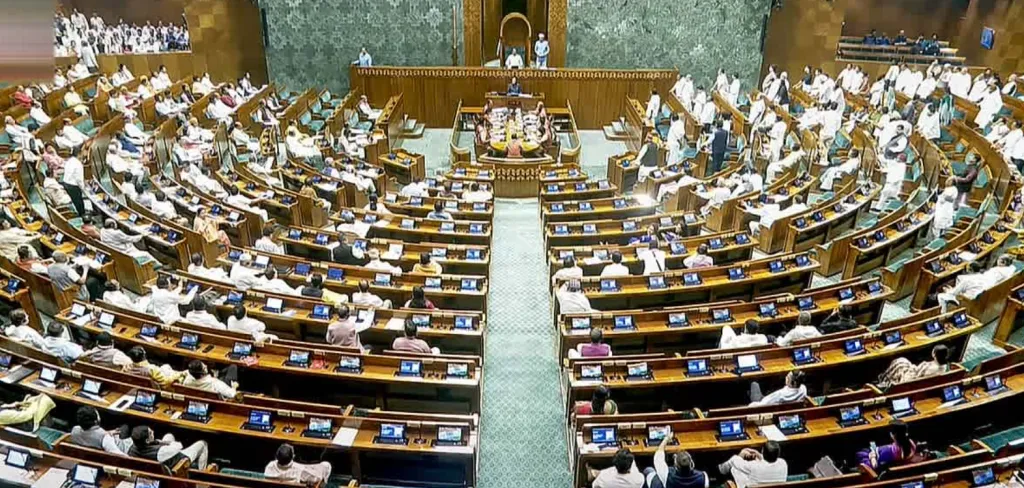
India’s Parliament concluded its 19-day Winter Session on Friday with both the Lok Sabha and Rajya Sabha adjourned sine die, capping a period of intense legislative activity marked by high productivity and sharp political confrontation. During the session, Parliament passed eight key bills, several of which are set to significantly reshape India’s nuclear energy, rural employment, and insurance sectors.
High Productivity Amid Contentious Debates
Lok Sabha Speaker Om Birla announced that the Lower House achieved 111% productivity across 15 sittings, reflecting an unusually efficient legislative schedule. However, the productivity came alongside frequent protests, walkouts, and heated debates, particularly over reforms touching social welfare and strategic sectors.
Nuclear Energy Opened to Private Sector
One of the most consequential legislations passed was the Sustainable Harnessing and Advancement of Nuclear Energy for Transforming India (SHANTI) Bill, approved on December 18. This landmark law replaces the Atomic Energy Act of 1962, marking the most significant overhaul of India’s nuclear framework since independence.
For the first time, private companies will be allowed to build and operate nuclear power plants. The move aligns with India’s long-term ambition to scale nuclear capacity to 100 GW by 2047, a steep jump from the current 8.88 GW. Opposition parties staged a walkout, objecting to provisions that allow the government to exempt certain nuclear facilities from licensing if associated risks are deemed “insignificant.”
Rural Employment Guarantee Revamped
Parliament also passed the Viksit Bharat Guarantee for Rozgar and Ajeevika Mission Bill, effectively replacing the Mahatma Gandhi National Rural Employment Guarantee Act (MGNREGA), which has been in force for nearly two decades.
The new law raises the guaranteed employment from 100 to 125 days per rural household annually. Union Rural Development Minister Shivraj Singh Chouhan defended the overhaul, citing structural flaws in MGNREGA, including fund misuse and weak monitoring mechanisms. Opposition members strongly protested the move, accusing the government of diluting Mahatma Gandhi’s legacy by removing his name from the scheme.
Insurance Sector Liberalised Further
Another major reform came through the Sabka Bima Sabki Raksha Bill, passed on December 17, which raises the foreign direct investment (FDI) cap in insurance companies from 74% to 100%. The bill amends multiple legacy laws, including the Insurance Act, 1938, LIC Act, 1956, and IRDAI Act, 1999.
The legislation also introduces sector-specific insurance licences and establishes a Policyholders’ Education and Protection Fund, aimed at improving consumer awareness and safeguarding policyholder interests.
Education Reform Bill Sent for Review
While several bills were passed, the Viksit Bharat Shiksha Adhishthan Bill, which proposes merging the UGC, AICTE, and NCTE into a single higher education regulator, was referred to a Joint Parliamentary Committee for further scrutiny.
A Transformational Session
The Winter Session stands out for its ambition and pace, pushing forward reforms across strategic, social, and financial sectors. While the government has framed the session as a step toward long-term national development, opposition parties have raised concerns over transparency, consultation, and the social impact of these sweeping changes.
As these laws move toward implementation, their real-world impact will be closely watched by citizens, investors, and policymakers alike.