Fixed Deposit vs FD Plus: Maximize Your Returns with the Right Choice
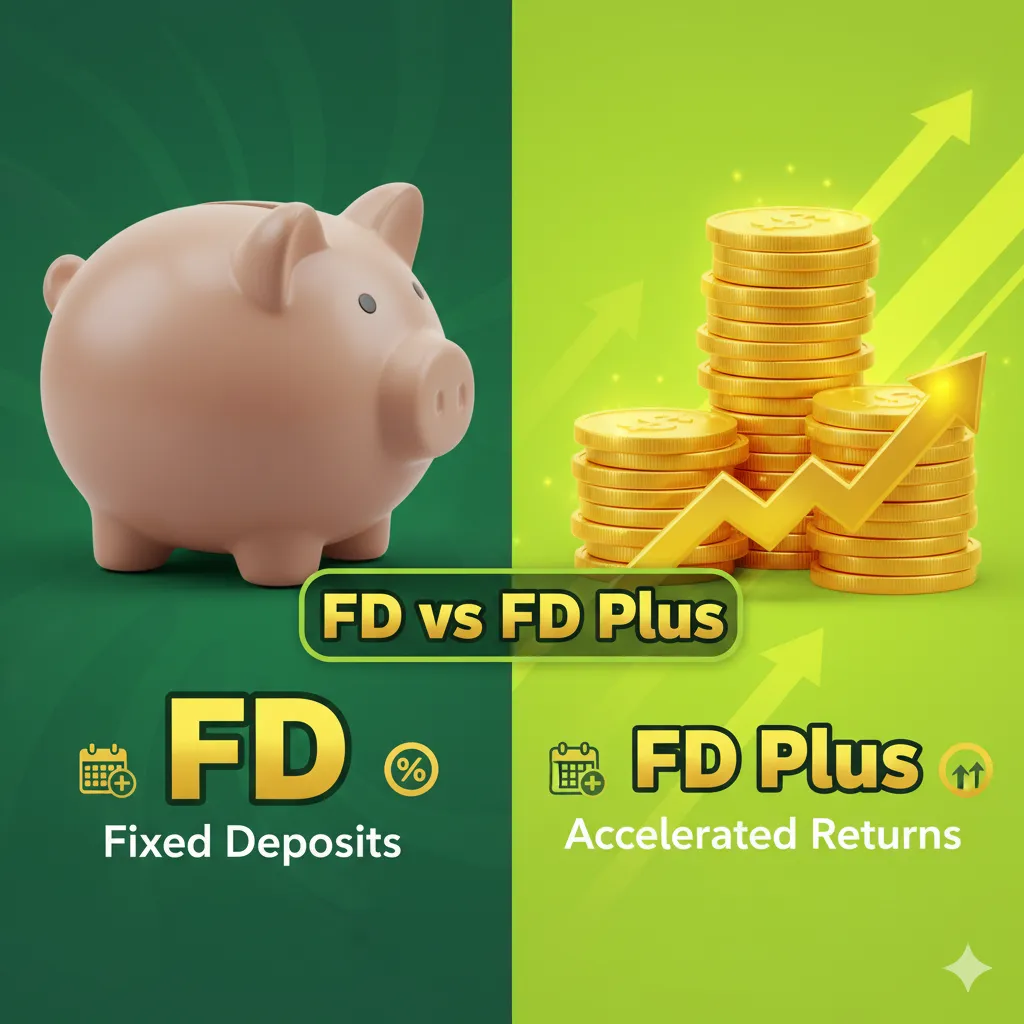
A Fixed Deposit (FD) is a traditional investment where you deposit a lump sum with a bank for a fixed tenure at a predetermined interest rate. The rate is generally fixed for the entire term, and you receive your principal plus interest at maturity or periodically based on your choice. FDs are popular for their safety, guaranteed returns, and ease of investment.
FD Plus is a specialized form of fixed deposit designed to offer higher returns than normal FDs. It is targeted at investors looking for increased yield by opting for longer tenure or larger deposits, often with a minimum amount threshold. The FD Plus scheme may provide options such as simple or compounded interest payouts and usually does not allow premature withdrawal or auto-renewal to encourage longer-term investments.
Key Differences Between Normal FD and FD Plus
Feature | Normal Fixed Deposit | FD Plus |
Interest Rate | Standard rates, generally lower | Higher rates compared to normal FD |
Minimum Deposit | Usually low (can be as low as Rs. 1,000) | Higher minimum deposit (may range from Rs. 15 lakh to Rs. 3 crore) |
Interest Payout | Monthly, quarterly, annually, cumulative | Usually cumulative or compounded; simple interest options also available |
Premature Withdrawal | Allowed, subject to penalty | Generally not allowed |
Auto-Renewal | Available | Not available |
Tenure Flexibility | Broad tenure choice | Custom tenure choices, often longer terms |
Target Customers | Retail investors with small to moderate corpus | High net worth individuals or long-term investors |
Interest Rates Offered by Various Banks on FD Plus (Oct 2025)
Here is a snapshot of FD Plus interest rates from some top banks and small finance banks in India for different tenures (approximate range):
Bank / Tenure | Short Term (up to 1 year) | Medium Term (1 - 3 years) | Long Term (3 - 10 years) |
Axis Bank FD Plus | 5.50% to 7.60% | 7.40% to 7.82% | 7.20% |
Utkarsh Small Finance Bank | 4.60% to 7.10% | 8.25% to 9.35% | 7.50% to 8.60% |
Jana Small Finance Bank | 3.05% to 7.30% | 7.35% to 8.45% | 6.60% to 7.30% |
Axis Bank's FD Plus requires a minimum deposit of Rs. 2 crore and offers rates on compounding/simple interest basis.
Utkarsh Small Finance Bank offers higher interest rates especially for medium tenures (above 8%).
Jana Small Finance Bank FD Plus has a minimum deposit requirement of Rs. 15 lakhs with competitive interest across tenure schemes.
Note: Interest rates are subject to change as per bank discretion and RBI guidelines.
Types of Fixed Deposits to Explore
For personal financial planning, investors can choose from these various FD types, depending on their liquidity needs, risk appetite, and income goals:
Regular Fixed Deposit: Standard FD with fixed return and flexible tenure, suitable for all investors.
Tax Saving Fixed Deposit: Offers tax deduction under Section 80C with a lock-in of 5 years; ideal for tax planning.
Senior Citizen Fixed Deposit: Higher interest rates for senior citizens; promotes savings for retirement.
Cumulative Fixed Deposit: Interest is compounded quarterly and paid at maturity as a lump sum.
Non-Cumulative Fixed Deposit: Interest paid out periodically monthly/quarterly/annually; provides regular income.
Flexible Fixed Deposit: Allows partial withdrawal or loan against FD; offers liquidity.
NRI Fixed Deposit: Designed for Non-Resident Indians with attractive interest and repatriation benefits.
FD Plus: High-return FD with larger minimum deposits and longer tenure restrictions for enhanced yield.
Recurring Deposit (RD): Not an FD technically but allows monthly installments towards a fixed amount for disciplined savings.
Conclusion
FD Plus schemes cater to investors seeking higher returns by committing larger sums for longer periods, foregoing liquidity features like premature withdrawal. Normal fixed deposits provide flexibility and accessibility for regular investors with smaller sums. Choosing among various types depends on individual financial goals, liquidity needs, and tax considerations. Understanding these distinctions helps in making informed investments to maximize returns securely.