RBI Holds Repo Rate at 5.25%: What It Means for You
Setting the Stage: Why This Meeting Mattered
Every two months, one of the most closely watched events in India's financial calendar takes place — the meeting of the Reserve Bank of India's (RBI's) Monetary Policy Committee (MPC). The MPC is a six-member panel headed by the RBI Governor that decides the key interest rates in the country. These rates, in turn, influence everything from your home loan EMI to the cost of borrowing for businesses, making the MPC's decisions deeply relevant to everyday life.
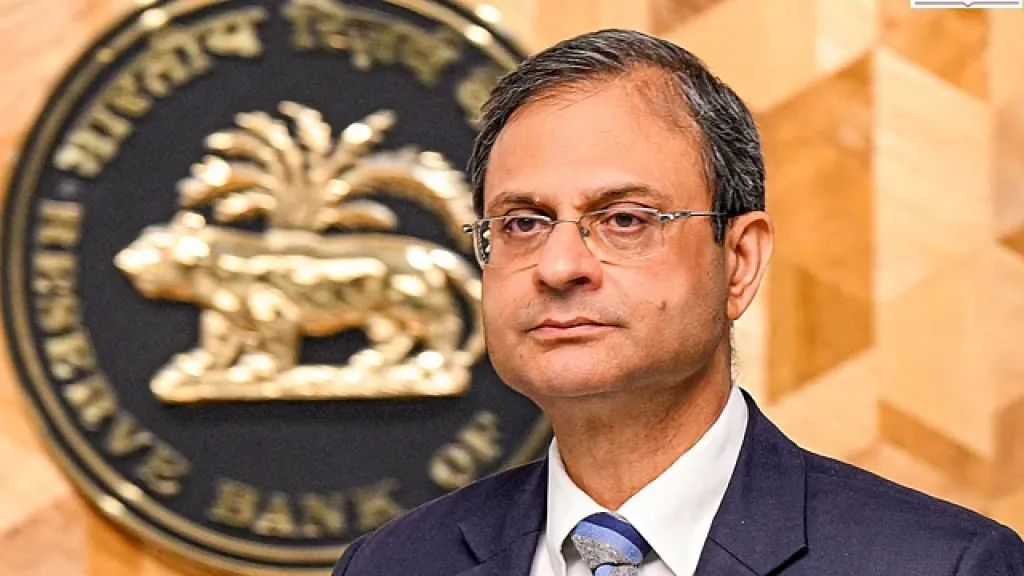
Today's meeting — held from April 6 to April 8, 2026, and chaired by RBI Governor Sanjay Malhotra — was particularly significant. It took place against a turbulent global backdrop: an ongoing war between the United States and Iran in West Asia had sent crude oil prices soaring, rattled financial markets, and put pressure on the Indian rupee. The big question on everyone's mind was: would the RBI cut rates to stimulate growth, or hold firm given the inflation risks?
The answer came this morning: hold firm.
The Headline Decision: Repo Rate Stays at 5.25%
The MPC unanimously decided to keep the repo rate unchanged at 5.25%.
The repo rate is the interest rate at which the RBI lends money to commercial banks. When the repo rate goes down, banks can borrow more cheaply from the RBI and pass on the benefit to customers through lower loan interest rates. When it goes up, borrowing becomes more expensive across the board. By keeping it steady, the RBI is essentially signalling: we are watching, but not moving just yet.
This decision was unanimous — all six members of the MPC voted for a status quo, reflecting a shared view that the current environment calls for patience and careful monitoring rather than action.
Alongside the repo rate, here is a snapshot of all the key policy rates that remain in place:
Policy Rate | Rate |
|---|---|
Repo Rate | 5.25% |
SDF (Standing Deposit Facility) Rate | 5.00% |
MSF (Marginal Standing Facility) Rate | 5.50% |
Bank Rate | 5.50% |
CRR (Cash Reserve Ratio) | 3.00% |
A quick explanation of these terms: the SDF (Standing Deposit Facility) is the rate at which banks park their excess funds with the RBI overnight. The MSF (Marginal Standing Facility) is the rate at which banks can borrow emergency funds from the RBI. The Bank Rate is the rate at which the RBI lends long-term funds. The CRR (Cash Reserve Ratio) is the percentage of a bank's total deposits that it must keep as a reserve with the RBI — money that cannot be lent out.
The Policy Stance: Staying 'Neutral'
The MPC also maintained its policy stance at 'Neutral'.
A policy stance tells the market which direction the RBI is leaning. A 'neutral' stance means the RBI is neither committed to cutting rates nor raising them in the near future — it is keeping all options open depending on how the economy evolves. This is in contrast to an 'accommodative' stance (which signals rate cuts ahead) or a 'withdrawal of accommodation' stance (which signals tightening).
By staying neutral, the RBI is essentially saying: the situation is uncertain, and we will respond based on data rather than pre-committing to a direction.
The Backdrop: War, Oil, and a Last-Minute Ceasefire
To fully understand today's decision, it is important to understand what has been happening in the world over the past month.
The United States and Iran have been engaged in a military conflict in West Asia for over a month. The US and Israel jointly carried out strikes on Iran on February 28, which triggered a sharp spike in crude oil prices globally. Since India imports a large share of its oil needs, higher crude prices feed directly into inflation, making everyday goods like fuel, cooking gas, and transportation more expensive.
This put the RBI in a difficult position. On one hand, slowing global growth and domestic uncertainty called for rate cuts to keep the economy moving. On the other hand, rising oil prices threatened to push inflation above comfortable levels.
However, in a dramatic development that arrived at 5:30 AM on the day of the policy announcement, the US and Iran agreed to a two-week ceasefire. The deal involves the US pausing its attacks in exchange for Iran reopening the Strait of Hormuz — a critical waterway through which a significant portion of the world's oil supply flows.
Governor Malhotra described this as "pleasant news, but not surprising." The ceasefire provided some immediate relief, with oil prices easing and Indian stock markets surging sharply on the day.
GDP Growth Forecasts: Strong but Slightly Trimmed
GDP (Gross Domestic Product) is the total value of all goods and services produced in a country in a given year. It is the primary measure of how fast an economy is growing. A higher GDP growth rate means the economy is expanding, businesses are doing well, and more jobs are being created.
The RBI projected India's real GDP growth for FY27 (the financial year 2026–27) at 6.9% — a solid number that reflects the underlying resilience of the Indian economy.
However, the near-term outlook has been trimmed slightly to account for the global uncertainty caused by the West Asia conflict:
Quarter | Earlier Forecast | Revised Forecast |
|---|---|---|
Q1 FY27 (April–June 2026) | 6.9% | 6.8% |
Q2 FY27 (July–September 2026) | 7.0% | 6.7% |
Q3 FY27 (October–December 2026) | 7.0% | 7.0% (unchanged) |
Q4 FY27 (January–March 2027) | — | 7.2% |
The slight cuts to Q1 and Q2 reflect the near-term drag from higher energy prices and supply chain disruptions caused by the conflict. Governor Malhotra noted that elevated energy and commodity prices, along with disruptions in the Strait of Hormuz, are "likely to impact growth this year." However, he added that strong momentum in the services sector, healthy corporate and bank balance sheets, and last year's GST rationalisation should keep growth on a firm footing. For context, India's GDP growth for FY26 (last year) was estimated at 7.6%.
Inflation Forecasts: Upside Risks Are Real
CPI (Consumer Price Index) inflation measures how much the prices of everyday goods and services — food, clothing, fuel, healthcare, education — have risen over a given period. It is the RBI's primary measure of inflation and the one it is mandated to keep under control, ideally close to 4%.
The RBI projected FY27 CPI inflation at 4.6%, with core inflation — which strips out volatile food and fuel prices to measure underlying price pressures — estimated at 4.4%.
Here is the quarterly breakdown:
Quarter | CPI Inflation Estimate |
|---|---|
Q1 FY27 (April–June 2026) | 4.0% (unchanged) |
Q2 FY27 (July–September 2026) | 4.4% (raised from 4.2%) |
Q3 FY27 (October–December 2026) | 5.2% |
Q4 FY27 (January–March 2027) | 4.7% |
The Q2 estimate has been nudged upward, and Q3 shows a noticeable spike to 5.2% — reflecting the expected pass-through of higher oil prices into the broader economy as the year progresses. The RBI's baseline assumption for crude oil is $85 per barrel for FY27, easing to $75 per barrel for FY28.
Governor Malhotra emphasised that the ultimate policy target is headline inflation — the overall CPI number — not just core inflation, though all components are carefully tracked.
What the RBI Said About the Rupee and Forex Markets
In recent weeks, the Indian rupee came under significant pressure as global uncertainty drove investors toward safer assets like the US dollar. The RBI had taken some regulatory steps to curb excessive speculation in the forex (foreign exchange) market — the market where currencies are bought and sold.
Specifically, the RBI had placed limits on the positions that banks could hold in the NDF (Non-Deliverable Forwards) market — an offshore market where investors make bets on the future direction of the rupee without actually exchanging currency. The RBI noticed that banks were building up arbitrage positions between the NDF market and the onshore deliverable market, which was amplifying rupee volatility rather than helping with price discovery.
Governor Malhotra was clear today: these are temporary, situation-specific measures. "These are not measures which are going to remain there forever," he said, reaffirming the RBI's long-term commitment to developing and deepening India's forex markets and supporting the internationalisation of the rupee.
On the broader question of the rupee's level, the RBI reiterated its standard position: it intervenes only to curb excessive volatility and does not target any specific exchange rate level or band.
System Liquidity: Comfortable and Supportive
The RBI reported that system liquidity — the total amount of surplus cash available in the banking system — stood at an average daily surplus of ₹2.3 lakh crore since the last MPC meeting. This is a healthy level, indicating that banks have enough funds to lend to businesses and individuals.
The RBI committed to remaining "proactive and pre-emptive" in managing liquidity, ensuring that the banking system continues to have sufficient funds to meet the productive requirements of the economy.
Additional Measures Announced Today
Beyond the rate decision, Governor Malhotra announced several structural and regulatory measures:
1. IFR (Investment Fluctuation Reserve) to be scrapped Currently, banks are required to maintain an IFR — a buffer fund set aside to absorb losses from fluctuations in the value of their investment portfolios (like government bonds). The RBI has decided to do away with this requirement, as it feels the existing prudential and capital adequacy framework is sufficient. This gives banks slightly more flexibility in deploying their capital.
2. CRAR computation norms to be relaxed CRAR (Capital to Risk-Weighted Assets Ratio) is a measure of a bank's financial strength — it tells you how much capital a bank holds relative to the risks it has taken on. The RBI proposed allowing banks to include quarterly profits in this calculation, making the ratio more dynamic and reflective of banks' actual financial health.
3. MSME onboarding on TReDS to be simplified TReDS (Trade Receivables Discounting System) is a digital platform where small businesses — MSMEs (Micro, Small and Medium Enterprises) — can get their unpaid invoices financed quickly by banks and financial institutions. Currently, MSMEs have to go through a due diligence process before being onboarded on TReDS. The RBI proposed removing this requirement to make it easier and faster for small businesses to access working capital.
4. Term money market opened to more participants Until now, only banks and standalone primary dealers could participate in the term money market — the market where financial institutions lend and borrow funds for fixed periods ranging from a few days to a year. The RBI has now expanded participation to include AIFIs (All India Financial Institutions) like NABARD and NHB, NBFCs (Non-Banking Financial Companies), and HFCs (Housing Finance Companies). This move is aimed at deepening the market and improving liquidity.
5. New NBFC categorisation framework coming soon The RBI announced that it will soon release a revised framework for categorising NBFCs — financial companies that offer banking-like services but don't hold a full banking licence — into different regulatory tiers (upper, middle, and base layers) based on their size and systemic importance.
What the Experts Said
On the rate decision: Several economists noted that the status quo was fully expected given the global uncertainty. Naveen Kulkarni of Axis Securities PMS suggested this could mark "the end of the rate cut cycle," with the RBI likely to pause from here. He cautioned that any further escalation in West Asia could even prompt a reversal of the rate cycle earlier than anticipated.
On the growth and inflation balance: Gaurav Kapur of IndusInd Bank pointed out that the balance of inflation risks to the upside suggests there could be space for at least 50 basis points (bps) of rate increases over the next 12 months, depending on how oil prices behave. One basis point equals one-hundredth of a percentage point, so 50 bps equals 0.5%.
On housing and home loans: Both Atul Monga of BASIC Home Loan and Tribhuwan Adhikari of LIC Housing Finance welcomed the unchanged rates, noting that rate stability is critical for keeping home loans affordable and sustaining demand in the housing market — particularly for first-time and mid-income buyers.
On fixed income markets: Basant Bafna of Mirae Asset Investment Managers noted that the yield curve — which shows the relationship between short-term and long-term interest rates — is expected to continue its steepening bias, meaning long-term rates may rise relative to short-term ones. He highlighted the 1–3 year segment of bonds as particularly attractive.
How Did Markets React?
Markets responded enthusiastically — though the rally was driven as much by the US-Iran ceasefire as by the RBI policy outcome itself.
The Sensex (BSE's benchmark index of 30 large companies) surged nearly 3.95%, while the Nifty 50 (NSE's benchmark index of 50 large companies) gained 3.78%. The Bank Nifty (an index tracking major banking stocks) jumped 5.67%. All sectoral indices closed in the green, with Nifty Realty and Nifty Auto each gaining close to 6.7–6.75%.
What Does This Mean for You?
For home loan borrowers, the status quo on the repo rate implies that external benchmark-linked lending rates (EBLR) will remain unchanged in the near term. Since most floating-rate loans in India are directly linked to the repo rate, EMIs are unlikely to see any immediate revision. However, the continuation of a neutral stance suggests that future movements will remain data-dependent, particularly on inflation trajectory and global developments.
For fixed deposit holders, the stable rate environment indicates limited upside in deposit yields in the short term. Banks typically align deposit rates with their marginal cost of funds and overall liquidity conditions. With system liquidity remaining in surplus and no immediate rate hike signals, incremental FD rate adjustments are likely to be gradual rather than sharp.
For equity investors, the combination of a steady interest rate regime and easing geopolitical tensions has improved risk sentiment, as reflected in today’s market rally. A stable rate environment supports equity valuations by keeping the cost of capital contained. However, the temporary nature of the ceasefire and persistent inflation risks—especially from crude oil—mean that volatility could re-emerge, making sectoral allocation and risk management critical.
For small business owners and MSMEs, the proposed easing of onboarding norms on TReDS (Trade Receivables Discounting System) and expanded participation in the term money market are structurally positive. These measures are expected to improve liquidity transmission and enhance access to short-term working capital financing, particularly for businesses dependent on receivables and supply chain credit.
What's Next?
The minutes of today's MPC meeting will be published on April 22, 2026, giving markets a detailed look at how each member voted and the reasoning behind the decision.
The next MPC meeting is scheduled for June 3 to 5, 2026. By then, the picture on crude oil prices, global growth, and the West Asia situation should be clearer — and the RBI's next move will depend heavily on how those variables play out.
For now, the message from Mint Street is measured and clear: India's fundamentals are strong, the RBI is watching closely, and it will act when the data demands it.
All rate and projection data sourced from the RBI's April 2026 monetary policy announcement.