₹1.8 Trillion FII Sell-Off: When Will Foreign Investors Return to India?
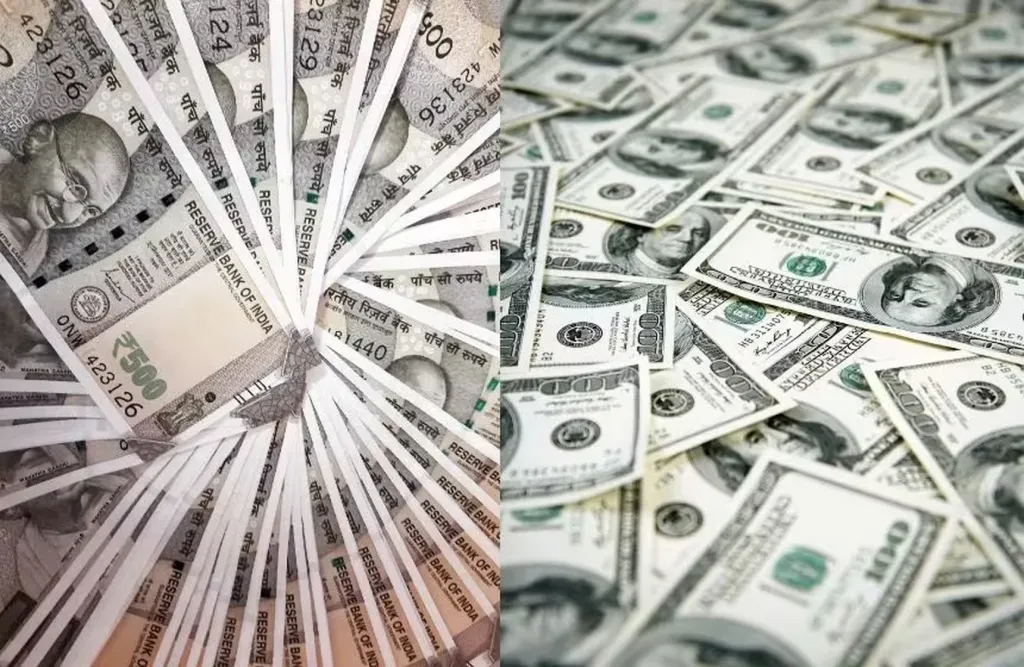
India's equity markets are caught in the grip of one of the most sustained foreign capital flight episodes in recent memory. War in West Asia, crude oil above $110 a barrel, a rupee touching all-time lows, and a stock market that has shed up to 14% from its peaks, the combination has created an environment that foreign investors have responded to with a single, decisive action: sell.
Yet even as the selling deepens, a growing chorus of analysts is making an uncomfortable, contrarian argument that the very scale of the flight is beginning to create the conditions for its eventual reversal.
The Scale of the Exodus
The numbers are staggering. Foreign portfolio investors (FPI) recorded a withdrawal of ₹1.17 trillion from Indian equities in March alone, the worst monthly outflow on record. This followed a brief, tantalising moment of optimism: in February, FPIs had pumped in ₹22,615 crore, the highest monthly inflow in 17 months. That reversal makes March's selloff all the more jarring in its speed and scale.
By the first two trading sessions of April, a further ₹19,837 crore had already left, taking total FPI outflows in 2026 to ₹1.5 trillion. In April alone, as per the documents seen, foreign investors have withdrawn more than ₹29,000 crore, taking the total FY26 outflow to ₹1.8 lakh crore according to NSDL data. On April 6 alone, FIIs offloaded equities worth ₹8,167 crore from Indian markets.
At the peak of the sell-off, investors lost over ₹12 lakh crore in a single day as the market capitalisation of BSE-listed companies eroded sharply. The India VIX, a measure of market fear, has climbed sharply, reflecting the anxiety now embedded in every trading session.
Three Forces Driving the Exit
The reasons behind the exodus are interlocking and self-reinforcing, making them particularly difficult to unwind.
The first and most visible is crude oil. The US-Iran military conflict has shut down parts of the Strait of Hormuz, a narrow channel that handles roughly 20% of the world's oil shipments, briefly pushing Brent crude past $120 per barrel. For India, which imports nearly 90% of its crude oil, this is not an abstract geopolitical event; it lands directly on the current account deficit, the import bill, and corporate margins across sectors from aviation to chemicals to logistics.
FY27 India GDP growth forecasts have already been slashed to 6.7% from a pre-conflict 7.2%, with inflation projected at 4.5–4.7% and warnings of fiscal slippages adding 0.5% to the GDP deficit. India imports 5.56 million barrels of crude daily, and a $10 price rise adds $20 billion to the import bill, widening the current account deficit by 30–40 basis points. At current prices, the damage is multiples of that.
The second force is the rupee. The Indian rupee has breached the 95-per-dollar mark for the first time, touching an all-time low of 95.12 against the US dollar, despite RBI interventions to tighten banks' forex exposure. Analysts say a surge in crude oil prices following the Iran war, persistent FPI outflows, and global central banks keeping interest rates steady, combined with weakening domestic fundamentals, are creating a "perfect storm" for the local currency. The rupee's fall is itself a cause of further selling — foreign investors who measure returns in dollars see their Indian equity gains eroded simply by the exchange rate, creating an accelerating feedback loop.
The RBI sold approximately $12 billion in the spot market by early March to stem rupee volatility, before tapering interventions to allow controlled depreciation. The message from the central bank is clear — it will cushion the fall, but it will not arrest it entirely.
The third force is the pull of better alternatives. Elevated US bond yields have improved the relative attractiveness of dollar-denominated assets, prompting capital to move away from emerging markets like India — a shift typically accompanied by a stronger dollar and tighter global liquidity. India is not uniquely punished in this environment; it is part of a broader emerging market reallocation. But given the additional country-specific headwinds, it is absorbing more than its share.
DIIs: The Floor That Has Held
What has prevented the Indian market from cratering entirely is the countervailing force of domestic institutional investors. In 2025, DIIs made massive net investments of ₹7.44 lakh crore, which completely eclipsed FII selling of ₹1.66 lakh crore. That trend has continued into 2026. DIIs have absorbed most of the pressure, which is why the market has corrected but not cratered. India's domestic investment base is significantly larger than it was five years ago, and domestic institutions are not spooked by the same things foreign funds are. They are thinking in years, not quarters. Monthly SIP inflows of approximately ₹30,000 crore provide a steady, recurring cushion that did not exist during previous episodes of foreign selling.
On March 20, FIIs recorded net selling of approximately ₹5,300–5,500 crore, while DIIs emerged as strong net buyers with over ₹5,300–5,700 crore in purchases, a near-perfect offset that illustrates just how structurally different India's capital markets are today compared to a decade ago, when FII selling of this magnitude would have triggered far deeper corrections.
The shift is structural, not incidental. Rising financial awareness, deepening mutual fund penetration, and the SIP habit among Indian retail investors have created a domestic bid that did not exist in earlier cycles. The result is a market that bends, but does not break — even under the weight of record foreign outflows.
The Contrarian Case for a Reversal
It is against this backdrop that DSP Mutual Fund has made its contrarian argument. The fund house said that the current weak macro environment may itself be turning into a positive setup for foreign investors, as several of the factors that had kept them away from India now appear closer to peaking. Valuations in parts of the market have become more reasonable, the rupee's sharp weakness has improved India's relative attractiveness for dollar-based investors, and the Indian rupee is near one of its weakest REER levels in many years.
"Historically, the biggest foreign inflows into India have come when valuations were cheap or at least reasonable, not when optimism was highest," DSP noted.
The data support this framing. A reversal in the trend could be triggered by positive developments in trade negotiations, stabilisation of the rupee, and signs of a sustained recovery in corporate earnings growth. On valuations, the Nifty's trailing price-to-earnings multiple has already fallen below 20 times, with major sectors — banking, IT, healthcare, insurance, and select FMCG- at or below their long-term averages. The market is no longer expensive. The question is whether it is cheap enough to attract risk capital against a backdrop of geopolitical uncertainty.
VK Vijayakumar, Chief Investment Strategist at Geojit Investments, offered a more conditional view: a reversal in FPI flows is likely only once geopolitical tensions ease and broader market stability returns, but the correction has already made valuations more reasonable.
What Could Trigger the Turn
The conditions for a reversal are not invisible; they are simply contingent. A meaningful de-escalation in West Asia would do more for Indian markets than any domestic policy move could. Crude below $90 a barrel would ease pressure on the current account, take the rupee's depreciation trajectory off its current steep slope, and reduce the inflation premium embedded in bond yields. Each of those outcomes would, individually, reduce the urgency of the foreign flight.
History offers a useful reference point. In March 2020, FIIs sold aggressively as COVID hit, and the Nifty dropped to 7,511, a fall of more than 38% in weeks. Investors who held, or who kept their SIPs running, saw the Nifty climb past 18,000 within 18 months. The 2022 rate-hike cycle produced a similar pattern. The investors who came out ahead were not those who timed the bottom; nobody does that reliably, but those who stayed the course.
Upside potential does exist: India's FY26 growth strength, BRICS diplomacy, an increased share of Russian oil imports, and 10–12 week crude stockpiles blunt immediate shocks. Domestic investors absorbing FPI exits and the rupee's undervaluation also promise a snapback when conditions stabilise.
The Bigger Picture
What 2026 is revealing is something more fundamental about India's place in the global capital order. The country is no longer the passive recipient of foreign flows that it once was. A decade ago, heavy FII selling could trigger sharp corrections. Today, strong DII participation often absorbs that pressure — a structural shift that has made Indian markets more resilient.
That resilience does not make the current pain less real. Retail investors watching their portfolios contract, companies facing higher borrowing costs, and consumers absorbing the downstream effects of a weaker rupee and costlier fuel are all living through a genuine disruption. But for longer-horizon investors, the DSP argument deserves serious engagement: the factors that are driving foreign investors away today — weak currency, poor sentiment, macro discomfort — may ultimately be laying the foundation for their return.
The exit is loud and visible. The re-entry, when it comes, will likely be quieter and faster than most expect.
Also Read: https://www.investwhat.in/india/investment/equities/550/how-to-invest-in-us-stocks-from-india