How Global Macroeconomic Factors Influence Commodity Prices
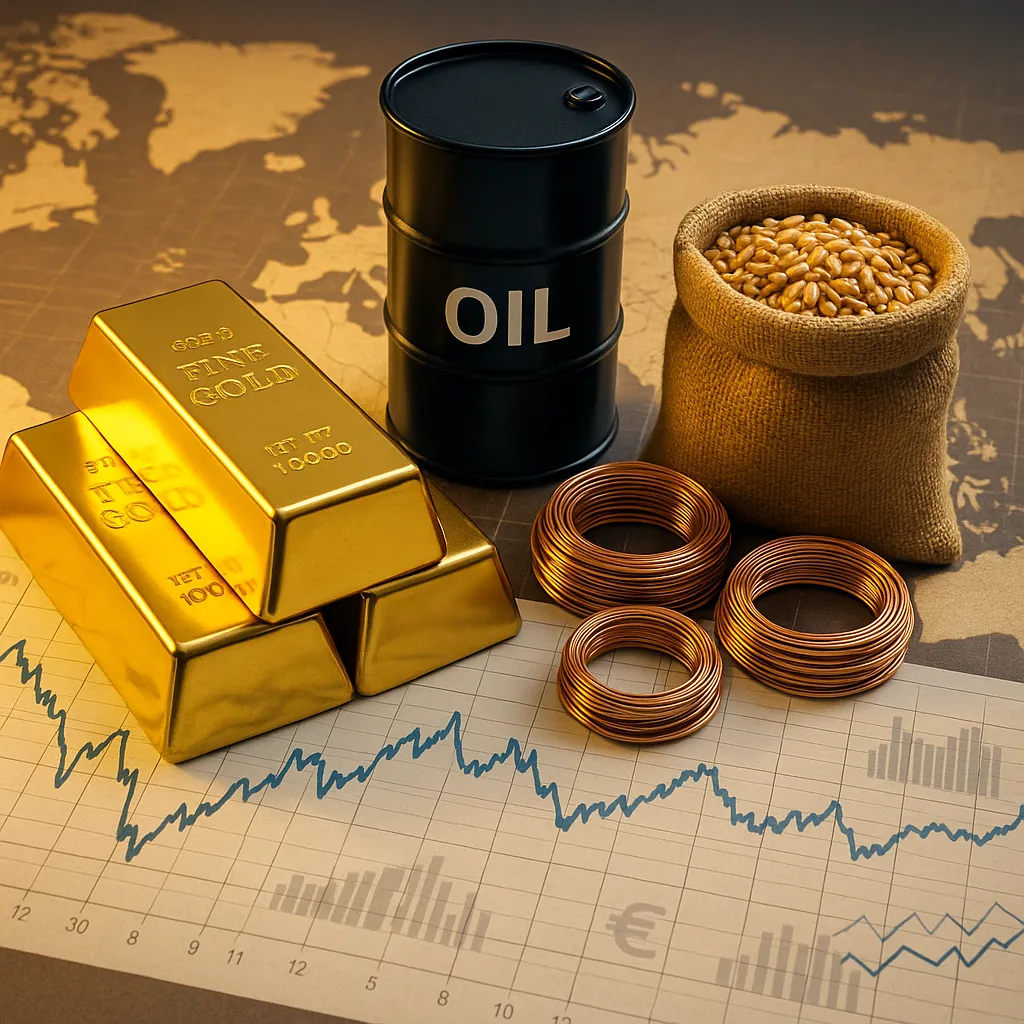
Commodity prices rarely move in isolation. Whether it’s crude oil, gold, natural gas, wheat, or metals, their prices are shaped by global macroeconomic forces that operate far beyond local markets. Understanding these forces helps investors, businesses, and policymakers anticipate volatility, manage risk, and make informed decisions.
This article explains how inflation, currency movements, geopolitical tensions, and supply–demand fundamentals influence commodity price cycles over time.
1. Inflation: The Most Direct Driver of Commodity Prices
Inflation, the rise in general price levels, has a strong, often direct impact on commodities.
Why inflation pushes commodity prices up
Commodities are real, physical assets.
When money loses value, real assets become more expensive.
Investors move toward commodities to preserve purchasing power.
Producers face rising input costs (fuel, labor), which pushes prices higher.
Gold as an inflation hedge
Gold traditionally rises when inflation accelerates because:
It is viewed as a store of value.
It does not depend on corporate earnings.
It protects portfolios when currencies weaken.
Energy & food inflation
Inflation often begins with rising commodity prices (oil, gas, grains) and later spills over into the broader economy, creating a reinforcing cycle.
2. Currency Fluctuations: The Dollar Effect
Most commodities are priced globally in U.S. dollars.
The dollar–commodity inverse relationship
When the dollar strengthens, commodities tend to fall.
When the dollar weakens, commodities often rise.
This happens because:
A strong dollar makes commodities more expensive for non-U.S. buyers.
A weak dollar increases foreign demand, pushing prices up.
Emerging markets are especially affected
Countries that import commodities (like India or Japan) face higher domestic prices when:
Their local currency depreciates
The U.S. dollar strengthens
This can trigger domestic inflation even when global prices remain stable.
3. Geopolitical Events: The Fastest and Most Volatile Trigger
Commodities are highly sensitive to political risk, conflict, and trade disruptions.
Key geopolitical triggers include:
Wars and conflicts near oil or gas supply routes
Sanctions on resource-producing countries
Trade wars and tariffs
Shipping disruptions (e.g., Red Sea, Suez Canal issues)
Political instability in major exporting nations
Examples
Oil spikes during Middle Eastern tensions
Wheat surges when major exporters face conflict or drought
Natural gas prices rise when pipelines are disrupted
Geopolitics can cause immediate and large price shocks, often unrelated to economic fundamentals.
4. Supply and Demand Dynamics: The Core Determinant
While macroeconomic factors influence trends, supply and demand remain the fundamental price drivers.
Supply-side factors
Weather cycles (affecting crops)
Mining output constraints
OPEC decisions on oil production
Technological advancements
Energy transitions affecting metal demand (lithium, copper, nickel)
Demand-side factors
Global economic growth
Industrial expansion
Energy consumption patterns
Demographic trends
Shifts toward electric vehicles or renewable energy
When supply is tight and demand is strong, prices rise sharply, even without geopolitical issues.
The supercycle phenomenon
Commodity supercycles occur when long-term demand consistently outpaces supply often driven by:
Rapid industrialization (e.g., China in the 2000s)
Infrastructure booms
Green energy transitions (metals supercycle)
5. Interest Rates and Monetary Policy
Central bank decisions significantly influence commodity markets.
Higher interest rates:
Strengthen the dollar
Reduce commodity demand
Lower inflation expectations
Decrease speculative activity
This generally pushes commodity prices lower.
Lower interest rates:
Weaken the dollar
Boost economic activity
Increase demand for commodities
Raise inflation expectations
This typically supports higher commodity prices.
6. Global Economic Growth Cycles
Commodity consumption is closely tied to economic activity.
During economic expansion:
Businesses increase production
Households consume more fuel, food, and goods
Industrial metals (iron ore, copper) rise
Energy demand surges
During recessions:
Demand falls
Manufacturing slows
Freight and fuel usage drop
Prices decline across most commodities
Depending on the commodity, growth cycles can have immediate or delayed price effects.
7. Structural Long-Term Trends Impacting Commodities
Beyond short-term macro factors, some structural changes shape long-term price direction:
Decarbonization and renewables increasing demand for batteries and metals
Global population growth affecting food and water resources
Climate change impacting crop yields
Technological advances reducing production costs
Shifting trade blocs and regionalization of supply chains
These trends redefine which commodities gain value over decades.
Conclusion
Commodity prices are shaped by a complex interplay of global macroeconomic forces. Inflation raises the cost of raw materials; currency fluctuations especially in the U.S. dollar immediately impact prices; geopolitical events cause sudden swings; and long-term supply-demand fundamentals determine sustained trends.