SEBI SETU: The Big Move to Fix India's Investment Advisory Problem

India’s investing landscape is growing at an unprecedented pace, with millions of new participants entering the market every year. But while access to financial products has expanded rapidly, access to reliable, regulated investment advice hasn’t kept up — creating a significant gap in the ecosystem.
To address this imbalance, India’s market regulator is taking a new step aimed at simplifying processes and strengthening the advisory space. This move could reshape how financial professionals operate and, more importantly, how investors access trustworthy guidance in the years ahead.
India Has More Investors Than Ever. But Almost No One Qualified to Guide Them.
Here is a number that should make every Indian investor stop and think.
India currently has over 22 crore demat accounts. That's hundreds of millions of people, salaried professionals, small business owners, college students, homemakers, putting their money into stocks, mutual funds, and other market instruments, many of them for the very first time.
Now here is another number: India has fewer than 1,000 registered Investment Advisers (IAs) who are legally qualified and regulated to guide those investors.
At present, there are around 1,000 registered investment advisers in the country, about 470 individuals and 530 non-individual entities. Let us do the math. Over 22 crore investors, and there are only 1,000 regulated advisers. This gap is not just large; it is alarming. And it is getting worse, not better.
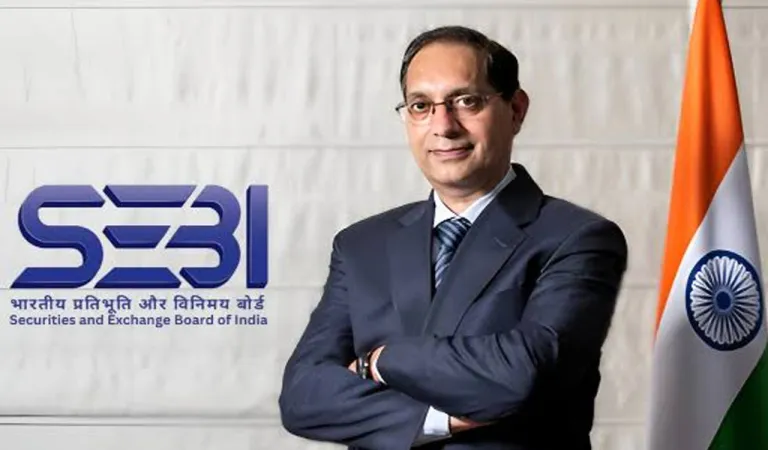
SEBI Chairman Tuhin Kanta Pandey, addressing the ARIA Aspire 2026 conference, said: "It is a matter of concern that the number of registered investment advisers has declined since 2021." This is the problem SEBI SETU is designed to fix. And understanding why this problem exists — and why it matters so much right now — is the first step to understanding why SEBI's latest move is one of the most important regulatory announcements of 2026.
What Is SEBI SETU?
SEBI SETU is a new digital platform being developed by India's markets regulator, the Securities and Exchange Board of India (SEBI), to provide end-to-end regulatory guidance for registered Investment Advisers (RIAs).
The word "SETU" means bridge in Hindi. That name is deliberate. The platform is designed to act as a bridge between qualified financial professionals and the often complex, compliance-heavy regulatory process of becoming — and staying — a SEBI-registered investment adviser. SEBI is developing SEBI SETU to provide simple, end-to-end regulatory guidance for investment advisers, covering the entire lifecycle from registration to ongoing compliance. The platform is expected to help advisers better understand compliance requirements and make regulatory processes easier.
In simple terms: right now, navigating SEBI's registration system is genuinely hard. The paperwork is complex. The compliance requirements are ongoing and multi-layered. The regulatory landscape is difficult to interpret without expert legal help. For a qualified financial professional thinking about becoming a registered adviser, the process itself is often enough of a deterrent to make them walk away — or worse, operate in the grey zone without registration.
SEBI SETU is built to eliminate that deterrent.
Announced: March 16, 2026, at the ARIA Aspire 2026 conference in Mumbai by SEBI Chairman Tuhin Kanta Pandey. Expected Launch: April 2026. Current Status: In development and launch preparation as of early April 2026. No public live link yet. Watch sebi.gov.in for updates.
The Problem SEBI SETU Is Solving: Why Are Registered Advisers Declining?
To appreciate why SEBI is doing this, you need to understand the strange and troubling paradox at the heart of India's financial advisory space.
India's retail investing story has been extraordinary over the past five years. Cheap internet, fintech platforms, and an unprecedented bull run brought crores of new investors into the market. The number of demat accounts has grown from roughly 4 crore in 2019 to over 22 crore today. SIPs are at record highs. Retail participation is up across every metric.
But here's the paradox: as the investor base exploded, the number of qualified, regulated advisers who could guide those investors actually fell.
This is not a small statistical blip. In 2021, when India already had far too few registered advisers relative to its investor base, there were 1,324 registered IAs. By early 2026, that number had fallen to around 1,000. More investors. Fewer regulated guides.
Why? Because being a SEBI-registered investment adviser in India has historically been operationally difficult. The registration process requires navigating multiple regulatory requirements. The ongoing compliance burden — filings, documentation, reporting, keeping up with SEBI circulars — is heavy, especially for individual advisers and small firms who don't have dedicated compliance teams. And until recently, the penalty framework for compliance errors was steep and disproportionate, making the risk of registration feel high relative to the reward.
SEBI has already taken several steps to ease entry barriers. Several steps have already been taken to make the advisory ecosystem more accessible, including relaxation of eligibility and documentation requirements, easier transition from individual to non-individual entities, and simplified registration processes. Registered advisers have also been given greater operational flexibility, such as the ability to share certified past performance data with clients and collect advance fees with client consent.
And yet, even after all of that, the numbers kept falling. Which told SEBI — and the market — that entry barriers are only part of the problem. The ongoing operational burden of staying registered is the other half. That is exactly what SEBI SETU is designed to address.
The Finfluencer Crisis: What Happens When Regulated Advisers Are Scarce
Here is what fills the gap when qualified, regulated advisers are absent: finfluencers.
Financial influencers on Instagram, YouTube, Telegram, and X have become the de facto investment advisers for millions of Indian retail investors. Some of them are entertaining. Some of them even share genuinely useful information. But the vast majority operate with zero regulatory accountability, zero fiduciary obligation, and zero legal responsibility for the advice they give.

According to SEBI's Investor Survey, nearly 62 percent of prospective investors are influenced by finfluencers. SEBI Chairman Pandey described this as undesirable, saying it distorts investor behaviour, weakens discipline and erodes trust.
Think about what that number means. 62 out of every 100 people entering the market are being influenced by people who are not regulated, not accountable, and not legally required to act in the investor's best interest. These are people who can recommend a stock on a Tuesday, benefit from the resulting price movement, and face no consequences when their followers lose money.
Pandey noted that the issue is not only regulatory — it is also cultural. Investors tend to gravitate towards free recommendations, as the habit of paying for professional financial advice is still evolving in India.
This cultural issue is real and important. In India, paying a doctor or a lawyer for advice is normalized. Paying a qualified financial adviser is not — yet. People expect investment advice to be free, which makes them easy targets for YouTube personalities who package stock tips as "educational content" and charge for exclusive Telegram groups.
SEBI has already taken enforcement action. In December 2025, SEBI impounded ₹546 crore from unregistered finfluencers who were found to be providing stock-specific advice disguised as financial education. But enforcement alone cannot solve a structural problem. The long-term solution is more regulated advisers — and that's what SEBI SETU is trying to enable.
What SEBI SETU Will Do: A Breakdown of Key Features
Based on the official announcement and all publicly available information as of early April 2026, here is what SEBI SETU is expected to deliver:
End-to-end guidance from day one. The platform will cover the entire lifecycle of being a registered investment adviser — from first-time application and registration, through ongoing compliance obligations, reporting requirements, and regulatory updates. It is designed to be the single go-to destination for all regulatory guidance, rather than having advisers piece together information from multiple SEBI circulars and portals.
Simplified, user-friendly interface. The platform is being built specifically to be accessible to individuals and small firms — not just large institutions with in-house legal teams. The goal is to make the process understandable for a qualified financial professional who is not a regulatory specialist.
Compliance support and reduced errors. One of the biggest pain points for existing RIAs is inadvertent compliance errors — missing a filing deadline, misunderstanding a new circular, or not being aware of a regulatory update. SEBI SETU aims to reduce these errors by proactively guiding advisers through their compliance calendar and obligations.
Support for the full adviser community. The platform is designed to serve both aspiring advisers going through registration for the first time and existing registered advisers managing their ongoing obligations.
Important clarification: SEBI SETU is a platform for financial professionals who are registered or aspiring to become registered investment advisers. It is not a tool for retail investors to use directly. Investors benefit indirectly — through a larger, better-supported pool of regulated advisers in the market.
The Bigger Ecosystem Play: Everything SEBI Is Doing at Once
SEBI SETU is not a standalone initiative. It is one piece of a much larger regulatory overhaul that SEBI announced at the ARIA Aspire 2026 conference. The full picture is important to understand.
Light-touch penalty structure for Investment Advisers
SEBI is working on a standardized light-touch penalty structure aimed at encouraging compliance while ensuring transparency and fairness. Currently, inadvertent compliance errors can trigger disproportionately harsh penalties — one of the key reasons qualified professionals avoid registration or exit after registering. A proportionate, light-touch penalty framework makes the regulatory environment far less intimidating without compromising accountability.
Common advertisement code for all intermediaries
SEBI is preparing a single, unified advertisement code for all financial intermediaries — including investment advisers, mutual fund distributors, and others. Right now, different types of intermediaries operate under different advertising rules, creating confusion and uneven enforcement. A common code will standardize how all financial services communicate with the public.
Working group on MFD and IA overlaps
A working group has been set up to examine existing regulations and suggest ways to reduce overlaps between mutual fund distributors and registered investment advisers. The blurring of lines between distributors (who earn commissions) and advisers (who charge fees and must act in the client's interest) has long been a regulatory grey area in India. Clarifying this boundary protects investors and gives both categories of professionals more clarity on what they can and cannot do.
Simplified NISM certification
SEBI is also working with the National Institute of Securities Markets (NISM) to simplify the certification process for individuals associated with investment advice who work in sales and non-core roles. This lowers one more entry barrier for qualified professionals considering the registered advisory path.
Past Risk and Return Verification Agency (PaRRVA)
The operationalization of PaRRVA is expected to strengthen verification of performance data. This addresses a major trust problem in India's advisory ecosystem — the widespread use of misleading past performance claims. PaRRVA creates a verification mechanism so investors can trust the performance data advisers share with them.
Together, these reforms represent SEBI's most comprehensive attempt yet to build a professional, scaled, and trustworthy investment advisory ecosystem in India.
What This Means for Investors
If you are a retail investor in India, SEBI SETU does not directly affect you — but it matters enormously for the quality of advice available to you.
A SEBI-registered Investment Adviser operates under strict obligations. They are legally required to act in your best interest — what is known as a fiduciary duty. They cannot earn commissions from the financial products they recommend to you. They must disclose conflicts of interest. They are accountable to SEBI and can be penalized for giving bad advice.
A finfluencer has none of these obligations. They can recommend a stock they own, pump up the price, and sell while you are still buying — all legally, as long as they frame it as "my personal opinion" or "not financial advice."
More registered advisers in the market means more access to advice that is legally required to be in your interest. That is the long-term payoff of everything SEBI is building right now.
As SEBI Chairman Pandey put it at ARIA Aspire 2026: "Technology will continue to improve, and investor expectations will rise. Advisers who combine technology with trust and knowledge with judgment will remain highly relevant."
What This Means for Financial Professionals
If you are a CA, MBA (Finance), CFA, CFP, or any other qualified financial professional who has been considering becoming a SEBI-registered Investment Adviser — but has been put off by the complexity of the process — SEBI SETU is being built for you.
The platform is expected to make registration navigable, compliance manageable, and the overall regulatory experience less of a deterrent. Combined with the light-touch penalty framework and simplified certification, 2026 may be the best window in years to formally enter India's regulated advisory space.
Watch sebi.gov.in and the SEBI Intermediary (SI) Portal for the official launch announcement.
The Bottom Line
India's financial inclusion story has been remarkable. But financial inclusion without financial empowerment is incomplete — and financial empowerment requires access to qualified, regulated, and accountable advice.
SEBI SETU is an acknowledgement that the regulator's own processes have been part of the problem, and a concrete commitment to fixing it. By making registration accessible and compliance manageable, SEBI is trying to tip the balance — from a world where qualified professionals avoid registration, to one where they actively seek it.
For India's 22 crore investors navigating an increasingly complex market, more regulated advisers is not just good news. It is necessary. And for the unregulated finfluencer economy that has grown fat in the advisory vacuum, SEBI's direction of travel is unmistakably clear.
The bridge is being built. It's called SEBI SETU.
Frequently Asked Questions
What is SEBI SETU? SEBI SETU is a digital platform being developed by SEBI to provide end-to-end regulatory guidance for registered Investment Advisers in India, covering everything from initial registration to ongoing compliance.
When will SEBI SETU launch? It was announced on March 16, 2026, at the ARIA Aspire 2026 conference and is expected to go live in April 2026. Check sebi.gov.in for the official launch.
Is SEBI SETU for investors or advisers? It is designed specifically for financial professionals who are registered or aspiring to become SEBI-registered Investment Advisers. Investors benefit indirectly.
How many registered investment advisers are there in India? As of early 2026, there are approximately 1,000 registered IAs in India — around 470 individuals and 530 non-individual entities.
What is the difference between a SEBI-registered IA and a finfluencer? A SEBI-registered IA has a legal fiduciary duty to act in the client's best interest and cannot earn commissions on products they recommend. Finfluencers have no such legal obligations and are not accountable to any regulator for the advice they give.
What is the finfluencer problem SEBI is worried about? According to SEBI's own Investor Survey, 62% of prospective investors are influenced by finfluencers — people who present opinions as expertise and speculation as strategy, without any regulatory accountability.
Disclaimer: This article is based on publicly available information from official sources and verified financial publications as of April 2026. SEBI SETU's features and launch timeline are subject to official SEBI announcements. Always refer to sebi.gov.in for the most accurate and up-to-date information.